Anchor-Led, Coalition-Based Development in Small and Midsized Cities
Written by New Growth Innovation Network
This insight brief was developed by New Growth Innovation Network (NGIN), with contributions from Beka Burton, Jackie Robles, Swati Ghosh, Cuevas Peacock, and M. Yasmina McCarty with research support from Broadstreet Impact Services.
Jump to a Topic
What are Anchors?
The Financial Barriers: Gaps, Costs, and Capacity Constraints
Catalytic Capital to Move Projects from Stalled to Shovel-Ready
Capacity, Community Voice and Trust Matter as Much as Capital
It is no secret that low to moderate Income (LMI) neighborhoods around the country have faced decades of disinvestment and underinvestment. LMI neighborhoods in small and midsize cities (SMCs) with populations of 50,000 – 500,000 face compounding challengessince SMCs have less developed capital ecosystems than large metros, smaller pools of public-sector capacity, and fewer specialized intermediaries to structure complex deals.
New Growth Innovation Network (NGIN) and Urban Institute research confirms that smaller cities receive lower levels of investment than large cities, with gaps driven by disparities in investment related to real estate development (residential and non-residential), community development, and federal programs. Small, post-industrial cities, cities with high rates of poverty, and cities with high Black and Latino populations see especially large investment gaps. Additional NGIN research highlights that capital shortfalls continue in SMCs with larger-than-average Black populations and higher concentrations of community finance institutions.These investment shortfalls translate directly into the conditions residents experience day to day, including shortages of housing, food access, healthcare, childcare, and entrepreneurial support.
What are Anchors?
Anchors are large, place-rooted entities with the balance sheet, credibility, and long-term commitment needed to lead transformative development. These include universities, hospitals, faith-based organizations, utilities, and community-serving nonprofits. An anchor-led, coalition-based approach to development can unlock community-driven real estate development in LMIs.
For example, Historically Black Colleges and Universities (HBCUs) are overwhelmingly located in SMCs in the South/Southeast, and may anchor LMI neighborhoods. They are often the economic engine of their neighborhoods, employing residents and supporting local businesses. Additionally, they tend to be well connected to local, state and federal government, positioning them for much needed municipal support. They are also often located in Community Reinvestment Act (CRA) and Tax Increment Financing (TIF) designated areas, both of which can prove helpful to site development. They can be an ideal partner to “anchor” redevelopment efforts surrounding their campuses and catalyze much-needed development and investment in LMI neighborhoods.
NGIN worked alongside Broadstreet Impact Services to interview developers, investors, and coalition builders to understand the most pressing obstacles developers face in accessing the capital they need for anchor-led projects, particularly in underserved neighborhoods.
The Financial Barriers: Gaps, Costs, and Capacity Constraints
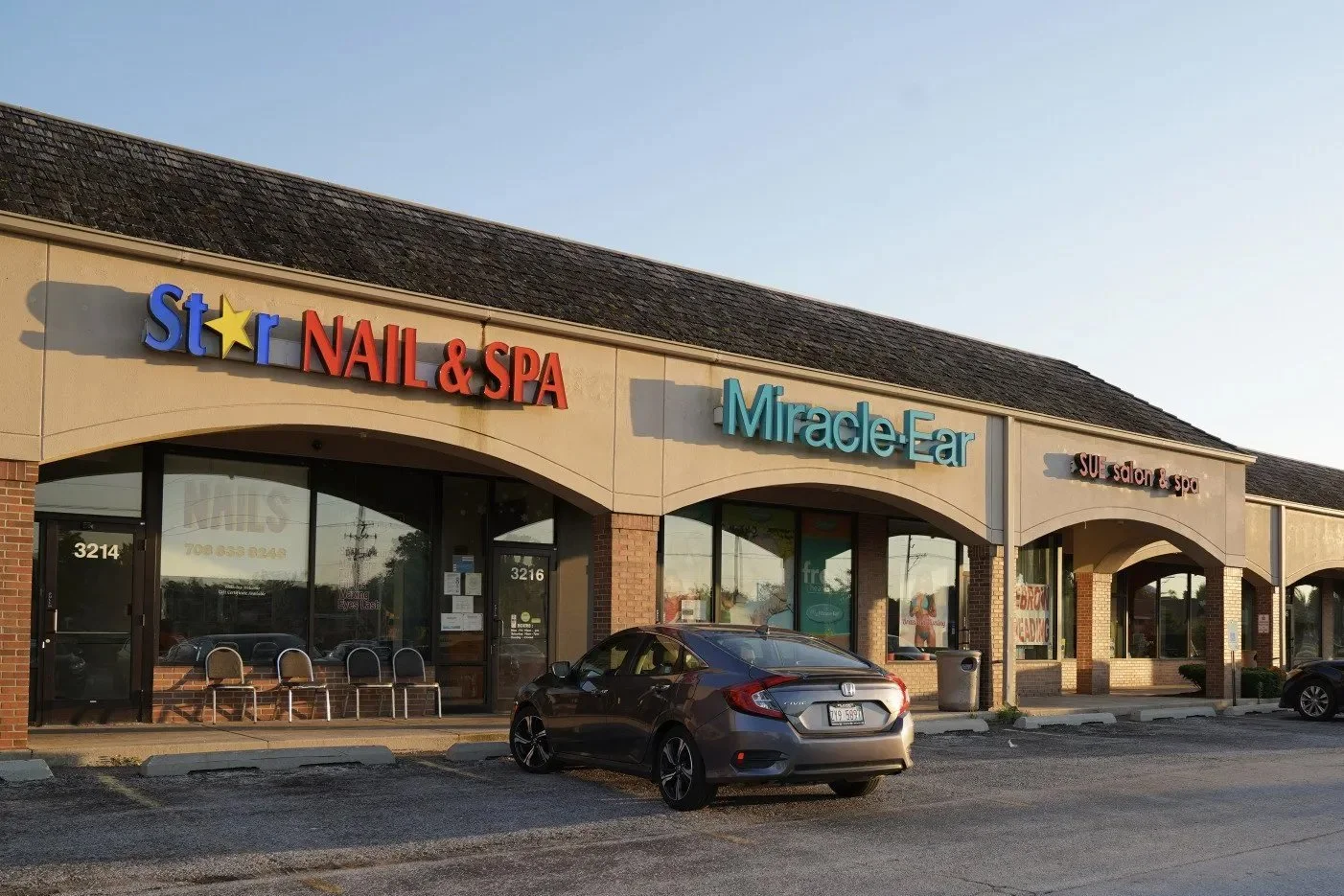
Butterfield Plaza shopping center in Illinois owned by Chicago TREND
Conventional lenders perceive LMI neighborhoods as high-risk and low-return after decades of disinvestment. Despite often owning properties ripe for repurposing or redeveloping, many anchors lack the team bandwidth and financial resources to engage in economic and community development projects.
NGIN worked alongside Broadstreet Impact Services to interview developers, investors, and coalition builders to understand the most pressing obstacles developers face in accessing the capital they need for anchor-led projects, particularly in underserved neighborhoods.
Institutional fragility compounds these issues. Many smaller anchor institutions, particularly those facing accreditation pressures, leadership transitions, or chronic underfunding, lack the internal real estate capacity that larger peer institutions take for granted. The Dayton Arcade rehabilitation, a $90 million mixed-use project anchored by the University of Dayton, required more than 25 separate capital sources to close. Broadstreet, Few SMC organizations have the in-house capacity to assemble that kind of capital stack alone.
Catalytic Capital to Move Projects from Stalled to Shovel-Ready
Anchor-led, coalition-based approaches can pool capacity, capital, and community voice across institutions. NGIN and Broadstreet Impact Services research highlighted a set of financing tools that, used together, can move projects from stalled to shovel-ready.
Credit enhancements and interest-rate buydowns.
First-loss capital and guarantee pools give mainstream lenders the confidence to participate. Interest-rate buydowns of two to three percentage points can be decisive.
Predevelopment funding.
Recoverable grants and bridge loans for planning, design, and entitlement work are the single most catalytic intervention identified in the research. Comparable models exist. For example, Washington D.C.'s Anacostia Opportunity Zone project was jump-started by a predevelopment loan and NMTC equity that standard financing would not initially touch.
“First in, last to control” capital.
Particularly for community wealth-building structures such as community land trusts and worker cooperatives, capital must move quickly while ceding decision-making authority to community members. This combination is rare in conventional markets and requires intentional design.
Coalition-based blended funds.
Pooling capital and capacity across CDFIs, philanthropy, anchor institutions, and public agencies reduces fragmentation and creates resilience against leadership turnover and subsidy delays. Place-based models such as Chicago TREND and shared anchor-led development corporations demonstrate the approach.
Streamlined access.
A common application shared across CDFIs and mission-oriented lenders would reduce the burden on developers while broadening access to different forms of capital. Predictable, formula-driven incentive programs, such as LIHTC or New York City's downloadable subsidy calculators, work better than discretionary, case-by-case approvals.
UAPB Campus South, Pine Bluff
When the University of Arkansas at Pine Bluff (UAPB), an HBCU, partnered with the City of Pine Bluff in 2005 to support the redevelopment of the Central Business District, the idea was originally focused on building a small business incubator in the vicinity of the university. However, in its role as an anchor institution, UAPB seeded ideas and projects that have paid off manifold for the community. The modest investment of $180k made by UAPB and $200k made by the City of Pine Bluff spurred approximately $75m in follow-on public and private investments in the two-block area surrounding the UAPB Business Support Incubator and Office Complex, affectionately known as the UAPB Campus South. It has also catalyzed growth in other parts of downtown including modern streetscape throughout downtown, newly built Jefferson County Library, and the Delta Rhythm and Bayous Blues & Wellness Plaza. The initial investment of $380k produced an extraordinary catalytic multiplier effect, transforming a three-block corridor into a civic, cultural, and educational anchor district and yielding a near-200× return in community-scale investment.
A near-200× return in community-scale investment.
Chicago TREND | Roseland Medical Center
Chicago TREND Corporation acquired the 27,000-square-foot Roseland Medical Center, along with an adjacent vacant parcel, for $6 million from the Chicago-based, Black-owned real estate firm. The Center serves as an extension to the Roseland Community Hospital, an anchor in the South side of Chicago. The transaction was uniquely structured to include 52 small-dollar investors, many of whom are local residents, reflecting a model of shared community ownership that fosters wealth-building in a historically disinvested neighborhood.
Many were local residents participating in a shared community ownership model.
As NGIN has previously highlighted, Catalytic Capital is a different approach. Rather than avoiding risk, it is designed to absorb it. Through tools such as flexible repayment terms, first-loss capital, loan guarantees, and blended finance, catalytic capital helps make investments possible that traditional markets often overlook.
Capacity, Community Voice and Trust Matter as Much as Capital
Hands-on technical assistance for capacity building is essential. Anchor institutions and emerging developers often need support navigating zoning processes, subsidy layering, and project management. The absence of by-right mixed-use zoning in many cities means projects must go through lengthy public processes that often take 12 to 24 months, and documentation requirements for layered subsidies routinely delay closings by six months or more. These are burdens mission-driven developers often cannot absorb without technical assistance supports, an example of which is NGIN’s SCALE program that is providing technical assistance to 8 cities working on real estate development and community wealth building projects. NGIN’s SCALE program helps anchor-led coalitions to move real estate projects from idea to investment ready projects, resulting in vibrant commercial corridors in LMI neighborhoods which provide vital services such as childcare, workforce training, grocery stores, etc.
Community voice and trust are equally important. Developers interested in working with anchor institutions will likely need to build trust first and then identify opportunities for partnerships. Sporadic, check-the-box, awareness meetings that fail to engage a broad spectrum of residents, leaders, and business owners in LMI neighborhoods are inadequate and often lead to delays and disruptions down the line. Anchor institutions and emerging developers may not always be in alignment with what the community envisions for a particular property. Intentional community engagement, community benefits agreements, and collaboration with grassroots groups are critical to ensure that development serves residents rather than displace them. Capital providers, similarly, earn participation through relationships, not transactions. NGIN initiatives like SCALE ensure that every project is anchored by authentic community engagement andtrust before any work proceeds.
A Path Forward
Anchor-led, coalition-based development is one of the most promising pathways to inclusive growth in SMCs, with direct investments in LMI neighborhoods. The institutions are in place. The needs are well-documented. What is missing is a financing system designed for the realities of this work.
Structures built around patient capital, credit enhancement, predevelopment support, and coalition technical assistance have the potential to unlock projects that have stalled for years. The communities surrounding anchor institutions in SMCs are ready.