What Is Catalytic Capital? A Different Approach to Community Investment
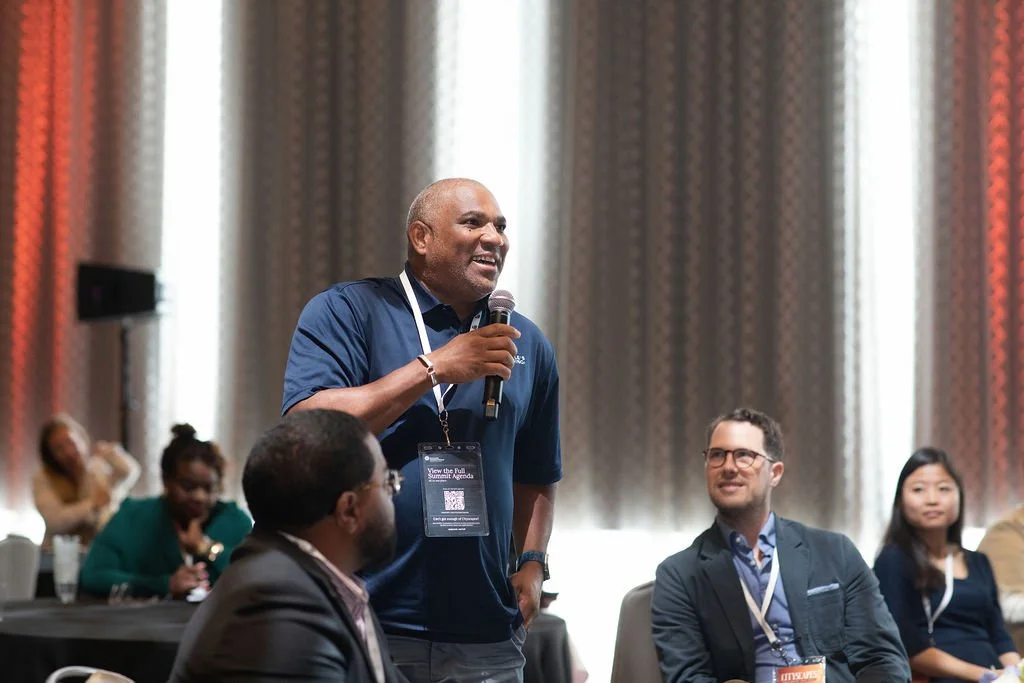
Insights from Cityscapes Summit 2026 Session | Catalytic Capital: Financing Community Growth | Speakers: Erika Seth Davies (Rhia Ventures), Betsy Biemann (Coastal Enterprises, Inc.) , Brady Meixell (Urban Institute), Damien Wilson (Reinvestment Fund)
For decades, community and economic development practitioners have wrestled with a familiar challenge: not only do the communities with the greatest potential often face the greatest barriers to investment, but they are also expected to prove they are investment-ready before they receive the investment needed to succeed.
Across discussions on HBCUs, small business growth, entrepreneurship, and community development finance, Cityscapes participants returned to this common theme.
The examples vary:
Small and rural communities are overlooked because projects are smaller, and transaction costs are higher.
First-generation entrepreneurs face additional hurdles because they lack the collateral, credit history, or networks traditional lenders expect.
Community-serving institutions often struggle to access flexible capital despite decades of local impact.
Catalytic capital was presented as a different approach. Rather than avoiding risk, it is designed to absorb it. Through tools such as flexible repayment terms, first-loss capital, loan guarantees, and blended finance, catalytic capital helps make investments possible that traditional markets often overlook.
As Damien Wilson of the Reinvestment Fund noted during the discussion, catalytic capital is patient, flexible, and risk-tolerant—qualities many community-serving projects need but rarely receive.
Rethinking Risk
One of the most compelling conversations wasn't about capital at all. It was about risk.
Participants challenged the assumptions that often shape investment decisions. Why are some projects viewed as inherently risky versus others? Why do lower property values, limited inherited wealth, or thinner credit histories frequently become proxies for risk, even when community demand, strong leadership, and long-term viability are present?
Catalytic capital expands the conversation of how risk is understood, not ignoring it. Projects that strengthen anchor institutions, create workforce pathways, improve health outcomes, or stabilize neighborhoods often generate forms of value that traditional financial models struggle to measure. Yet those impacts can be essential to long-term community prosperity.
The question for practitioners is simple: What opportunities are we missing because our definitions of risk are too narrow?
HBCUs Offer a Powerful Example
Historically Black Colleges and Universities emerged as a recurring example of where catalytic capital can create transformational outcomes.
Many HBCUs serve as employers, workforce developers, cultural institutions, and community anchors simultaneously. Yet they often face deferred maintenance, aging infrastructure, constrained balance sheets, and limited access to conventional financing. One example discussed involved financing that helped restructure debt and improve cash flow at an HBCU in Jacksonville, Florida – Edward Waters University. (formerly Florida Edwards College). On paper, they were high-risk, but to CDFI funders, they were the perfect partner. The result was not merely a financial transaction. The institution gained capacity to invest in campus improvements, expand workforce programs, attract additional students, and deepen its role as a community-serving anchor. Due to this initial CDFI financing, the institution strengthened its position within the broader regional economy by moving from a college to a university, they provide a bus service for senior citizens on and off campus, and are one of the largest job producers in Jacksonville.
The lesson extends beyond HBCUs. Community-serving institutions often require capital structures that acknowledge their broader civic role. Measuring success solely through financial return can obscure the economic and social value these institutions create.
Technical Assistance Is Not Optional
One comment drew knowing laughs from nearly everyone in attendance: some entrepreneurs get “mentored to death.”
The room immediately understood what that meant. Many communities have become very good at offering workshops, coaching, technical assistance, and accelerator programs. Yet entrepreneurs still leave those programs without access to actual capital.
The challenge isn’t choosing between technical assistance and financing. The strongest examples shared during Cityscapes paired the two together. Capital without support can set people up to fail. Support without capital can leave people stuck in place. One statistic resonated within the conversation: for every dollar invested, roughly twenty-five cents may be needed in technical assistance to help ensure successful outcomes.
A perfect example: In the fall of 2025, the Reinvestment Fund launched the HBCU Brilliance Initiative inaugural Cohort for 10 HBCUs across the country. The initiative is providing grants and technical assistance to HBCU leaders while helping them become better borrowers by preparing them for making financing requests, identifying the best partners to ask for funding, assists leaders with understanding their master plan and immediate needs, re-looking at their board composition for stronger sustainability, along with identifying projects and then figuring out how to finance the project. This initiative is pairing capital with support to ensure success instead of failure.
For practitioners, this has important implications. Economic development strategies that focus solely on deploying capital may overlook the infrastructure required for long-term success. Yet for funders, the volume of capital made available should be commensurate with the need for financing and infrastructure alike.
Community Voice Should Shape Capital Decisions
Many conversations about investment focus on who receives capital. Far fewer focus on who helps decide where it goes. Rhia Ventures, Urban Institute, and the Reinvestment Fund highlighted approaches that incorporate community advisory councils, participatory decision-making processes, community support requirements, and local stakeholder feedback into investment decisions.
This represents an important shift. Rather than treating community engagement as a separate activity that occurs before or after investment, these approaches embed community knowledge directly into financial decision-making.
Communities are not simply beneficiaries of investment. They need to become participants in shaping it. For leaders seeking more equitable development outcomes, this may be one of the most replicable lessons from Cityscapes.
Where the Tension Still Exists
Discussion around catalytic capital is often not without disagreement. A recurring tension emerges between mission and return.
As impact investing grows and attracts larger pools of capital, some Cityscapes participants questioned whether the field risks becoming too focused on financial performance. Others emphasized that maintaining investor confidence remains necessary to scale resources.
This tension surfaced around Opportunity Zones, ESG investing, and other place-based investment tools. Some participants viewed these mechanisms as important pathways for attracting capital. Others expressed concern that insufficient accountability and impact measurement can allow investments to generate profits without producing meaningful community benefits.
The debate revealed an important reality: catalytic capital is not simply about moving more money. It is about ensuring capital is aligned with community outcomes. More investment does not automatically produce more equity.
Intentionality matters.
What Local Leaders Can Do Now
For practitioners working in cities, regions, and community-based organizations, the conversations point toward several immediate actions:
Map your capital ecosystem. Identify local CDFIs, philanthropic partners, anchor institutions, mission investors, and community lenders already active in your region.
Pair capital with capacity. Build technical assistance into financing strategies from the outset rather than treating it as a separate program.
Redefine risk locally. Examine how underwriting standards, procurement practices, and investment criteria may unintentionally exclude community-serving projects.
Elevate community voice. Create advisory structures that allow residents, entrepreneurs, and local organizations to shape investment priorities.
Focus on anchor institutions. Schools, hospitals, HBCUs, community colleges, and cultural organizations often create ripple effects that extend far beyond their balance sheets.
Think beyond grants. Explore how loan guarantees, credit enhancement pools, blended finance, recoverable grants, and mission-driven investment structures can unlock additional capital.
The Future of Community Investment
The future of catalytic capital may not be defined by entirely new financial tools. It may be defined by a willingness to ask different questions.
What if community value mattered as much as collateral?
What if capital flowed toward possibility instead of simply following past performance?
What if investment decisions were informed not only by markets, but by the people most affected by them?
Rather than asking how we can bring more capital into our communities, perhaps the better question is how we can build the partnerships, trust, and local capacity needed to put capital to work in service of community goals. The leaders and practitioners at Cityscapes challenged us to spend the next decade connecting investment to vision, technical assistance to opportunity, and residents to decision-making. The result could be communities that are not only growing, but growing in ways that are more resilient, inclusive, and locally owned.
Catalytic capital offers a framework for doing exactly that. Not by filling gaps, but by helping communities build the conditions for lasting growth and shared prosperity.
The real innovation isn't new capital. It's changing who gets trusted with it.
More about NGIN’s Small and Midsized Cities Hub
Cityscapes Summit is New Growth Innovation Network's (NGIN) biennial economic development conference, bringing together community, economic development, and city leaders to ignite innovations and power economies. This work is supported through NGIN's Small and Midsized Cities (SMC) Hub, a program funded by the Robert Wood Johnson Foundation, that offers a suite of programs, technical assistance, resources, and tools to support economic and community leaders build healthy, thriving communities in cities with populations ranging from 50,000 to 500,000.
To access upcoming events, resources, and peer learning opportunities designed for small and mid-sized cities, consider joining the SMC Hub Community of Practice. Membership is free and open to practitioners nationwide. Join here.