Anchors at Work: How Hospitals, HBCUs, and Faith Institutions Are Building Community Wealth
Insights from Cityscapes Summit 2026 Session | Anchors at Work: How Hospitals, HBCUs, and Faith Institutions Are Building Community Wealth | Speakers: David Zuckerman (Healthcare Anchor Network), Sidney Williams (Oikos Institute), Henry Golatt ( HBCU CDAC), Bernita Johnson-Gabriel (NGIN)
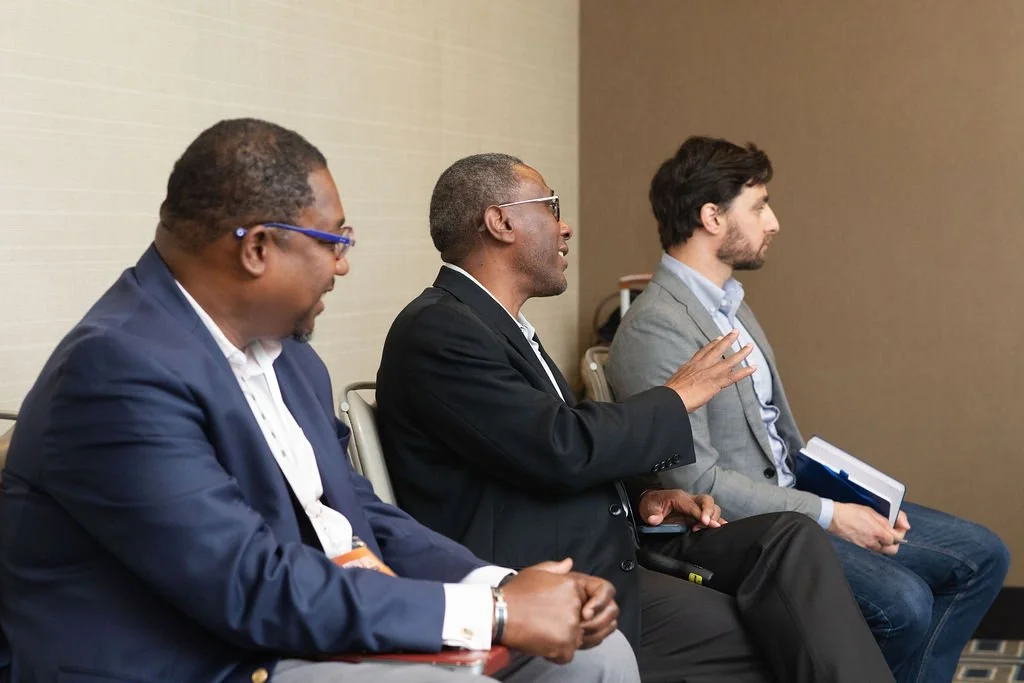
Hospitals, Historically Black Colleges and Universities, and faith based institutions collectively hold land, deploy significant capital, shape local hiring and purchasing, and maintain deep trusted relationships with the neighborhoods they serve. Increasingly, these anchor institutions are being viewed not only as service providers or employers, but as active partners in building community wealth and expanding opportunity from within in small and midsize cities across the US.
During NGIN's Cityscapes session, Anchors at Work: Investing Locally Through Trusted Institutions, leaders Dave Zuckerman from the Healthcare Anchor Network, Sidney Williams at Oikos Institute, and Henry Golatt from HBCU CDAC explored how these institutions are beginning to align their core economic activity including investment, hiring, procurement, and land use with long term community priorities and reducing community reliance on philanthropy. This shift reflects a deeper change in thinking about what it means to serve a community, moving from short term support toward building the conditions for lasting economic stability and shared prosperity.
The examples that follow offer practical lessons for community leaders, funders, practitioners, and policymakers and highlight how anchor institutions can move from intention to action by leveraging the assets they already control in more strategic and coordinated ways.
How Hospitals, HBCUs, and Faith Institutions Are Investing in Community Wealth
The Healthcare Anchor Network has helped popularize the anchor mission approach by encouraging health systems to think beyond grantmaking and volunteerism to examine the full range of assets they control in alignment with community development goals. These assets include hiring, purchasing, place-based investing, policy advocacy, real estate, and skills-based volunteering. The goal is not simply to do more, but to ensure that an institution's economic footprint contributes to community well-being. This shift is particularly important at a time when many communities face resource constraints. Grants alone cannot solve complex challenges such as housing affordability or economic mobility. Leveraging institutional assets at scale can create opportunities that cannot be solved with philanthropy alone.
Why More Hospitals Are Investing Upstream
For years, hospitals focused primarily on treating illness after it occurred. Today, many health systems increasingly recognize that health outcomes are shaped by housing stability, economic opportunity, food access, and neighborhood conditions. As a result, some are moving beyond addressing immediate social needs and investing in the factors that influence health long before a patient enters a clinic. This approach is often described as moving upstream.
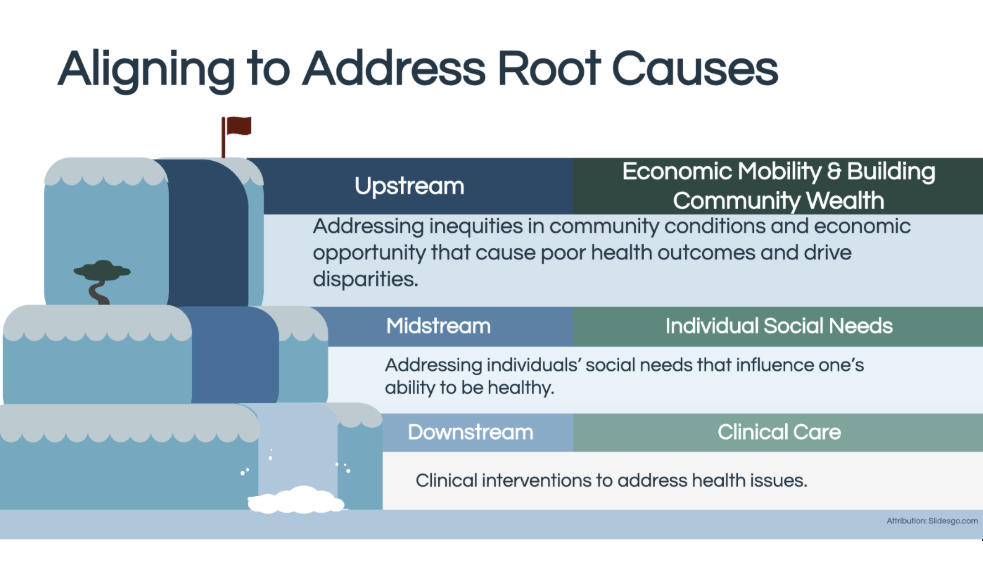
Rather than simply responding to crises, hospitals are beginning to invest in the community conditions that help prevent them. One of the most promising strategies is place-based investing, which uses a portion of an institution's investment portfolio to support projects that generate both community impact and financial returns.
In Colorado, Intermountain Health and CommonSpirit Health have invested in the Elevation Community Land Trust, a model that helps preserve permanently affordable homeownership opportunities. Community land trusts separate ownership of land from ownership of housing, helping families build wealth while maintaining affordability for future generations. The initiative has supported hundreds of homeowners and preserved housing opportunities in rapidly changing communities.
In northern New England, Dartmouth Health helped launch the Upper Valley Loan Fund, a $10 million housing fund supporting affordable and workforce housing across New Hampshire and Vermont. By partnering with other major employers, the initiative demonstrates how anchor institutions can convene resources and help address regional housing shortages that affect both communities and local workforces.
Even smaller systems are finding ways to participate. Hawai‘i Pacific Health has committed millions of dollars in low-cost financing to support affordable housing, local food systems, and economic empowerment initiatives. These investments show that place-based investing is not limited to the largest institutions. Modest allocations of patient capital can still create meaningful community impact.
The broader lesson is that hospitals do not need to become housing developers or community development organizations. Instead, they can use their investment portfolios, purchasing power, and influence to support the partners already doing this work.
HBCUs as Catalysts for Place-Based Development
Historically Black Colleges and Universities have long served as engines of educational opportunity and economic mobility. Increasingly, they are also emerging as important partners in community development.
A compelling example comes from the University of Arkansas at Pine Bluff, where university leaders partnered with local government and community stakeholders to launch a long-term downtown revitalization effort known as the Pine Bluff Blueprint.
Rather than waiting for outside investment, the university helped establish an innovation corridor anchored by business incubation, public space activation, arts and cultural investments, and commercial development. What began as a relatively modest investment evolved into a broader redevelopment strategy that attracted additional public and private resources over time.
The most important lesson from Pine Bluff may not be the specific project itself, but the process behind it. The university used its credibility, relationships, and long-term commitment to place to bring stakeholders together around a shared vision. In many communities, HBCUs are uniquely positioned to play this role because of the trust they have built over generations.
At a time when many cities are searching for institutions capable of convening diverse partners, HBCUs offer an often-overlooked model for place-based leadership.
Faith Institutions and Community Wealth Building
Faith institutions may represent one of the most underutilized development assets in many communities.
Churches, mosques, and other faith-based organizations often own strategically located land in neighborhoods facing both disinvestment and redevelopment pressure. Yet many congregations lack access to the technical assistance, development expertise, and early-stage capital needed to transform these assets into community-serving projects.
Increasingly, faith leaders are exploring how underutilized land can support affordable housing, community services, workforce development, and local businesses. These conversations are especially important in neighborhoods where rising land values threaten to displace long-time residents. For faith institutions, the opportunity is not simply to preserve aging buildings. It is to leverage existing assets in ways that strengthen community stability and create pathways to ownership and wealth creation.
Below you will find a chart of benefits of engaging faith-based institutions, including why they are uniquely positioned as anchor institutions and how they can play a critical role in emerging cities experiencing rapid growth alongside a strong and active faith presence.
Lessons for Local Leaders
While the examples shared varied by sector and geography, several common themes emerged.
Successful initiatives start with existing assets rather than waiting for new resources. Anchor institutions already control land, capital, purchasing budgets, and relationships that can support community development.
Transformative projects rarely rely on a single funding source. The strongest examples combined institutional investments, public funding, philanthropy, and community development finance into layered capital stacks that made projects possible.
Partnerships matter. No single institution can solve housing challenges, economic inequality, or neighborhood disinvestment alone. Progress happens when anchor institutions work alongside residents, community organizations, public agencies, and private-sector partners.
Long-term impact requires moving beyond programs and toward systems change. The most effective strategies align institutional operations with community goals rather than relying solely on charitable giving. Learn more about frameworks and examples of systems change work from another Cityscapes session here.
As communities continue searching for equitable development solutions, anchor institutions represent an often-overlooked source of stability, investment, and leadership. The most promising examples emerging today are not waiting for new institutions to arrive. They are activating the assets already embedded within their neighborhoods and using them to create more inclusive pathways to prosperity.
More about NGIN’s Small and Midsized Cities Hub
Cityscapes Summit is New Growth Innovation Network's (NGIN) biennial economic development conference, bringing together community, economic development, and city leaders to ignite innovations and power economies. This work is supported through NGIN's Small and Midsized Cities (SMC) Hub, a program funded by the Robert Wood Johnson Foundation, that offers a suite of programs, technical assistance, resources, and tools to support economic and community leaders build healthy, thriving communities in cities with populations ranging from 50,000 to 500,000.
To access upcoming events, resources, and peer learning opportunities designed for small and mid-sized cities, consider joining the SMC Hub Community of Practice. Membership is free and open to practitioners nationwide. Join here.