

When a data center or other major technology project is proposed, residents want to know how it will affect their community. Community-based organizations (CBOs) can help bring those questions to developers and public officials while plans are still taking shape.
CBOs understand local needs, hear residents' concerns, and can help ensure community priorities are considered before key decisions are made. For proposed data centers, for example, those concerns may include higher electricity bills, water consumption, noise, limited permanent job opportunities, and a lack of transparency in the planning process. In a 2026 Annenberg Public Policy Center survey, 61% of Americans opposed new data centers in their area, up from 49% earlier in the year. Similar concerns arise with other technology-based economic development projects.
New Growth Innovation Network (NGIN) explored similar concerns in our report, Investigating Regional Engagement and Broad-Based Outcomes of Tech-Based Economic Development. We interviewed 35 people near two of the first NSF Regional Innovation Engines, which focus on semiconductor technology in Florida and regenerative medicine in North Carolina. Our research highlights the importance of involving community organizations early, helping residents understand proposed investments, and ensuring their concerns reach decision-makers.
Whether your community is considering a data center, semiconductor plant, or biotechnology campus, asking the right questions is only the beginning. CBOs also need to know what to look for in developers' answers, understand why residents may push back, and determine how to advocate for their interests. These five questions provide a starting point, followed by warning signs to watch for, reasons behind community resistance, and practical steps your organization can take to ensure residents have a voice in decisions that affect them.
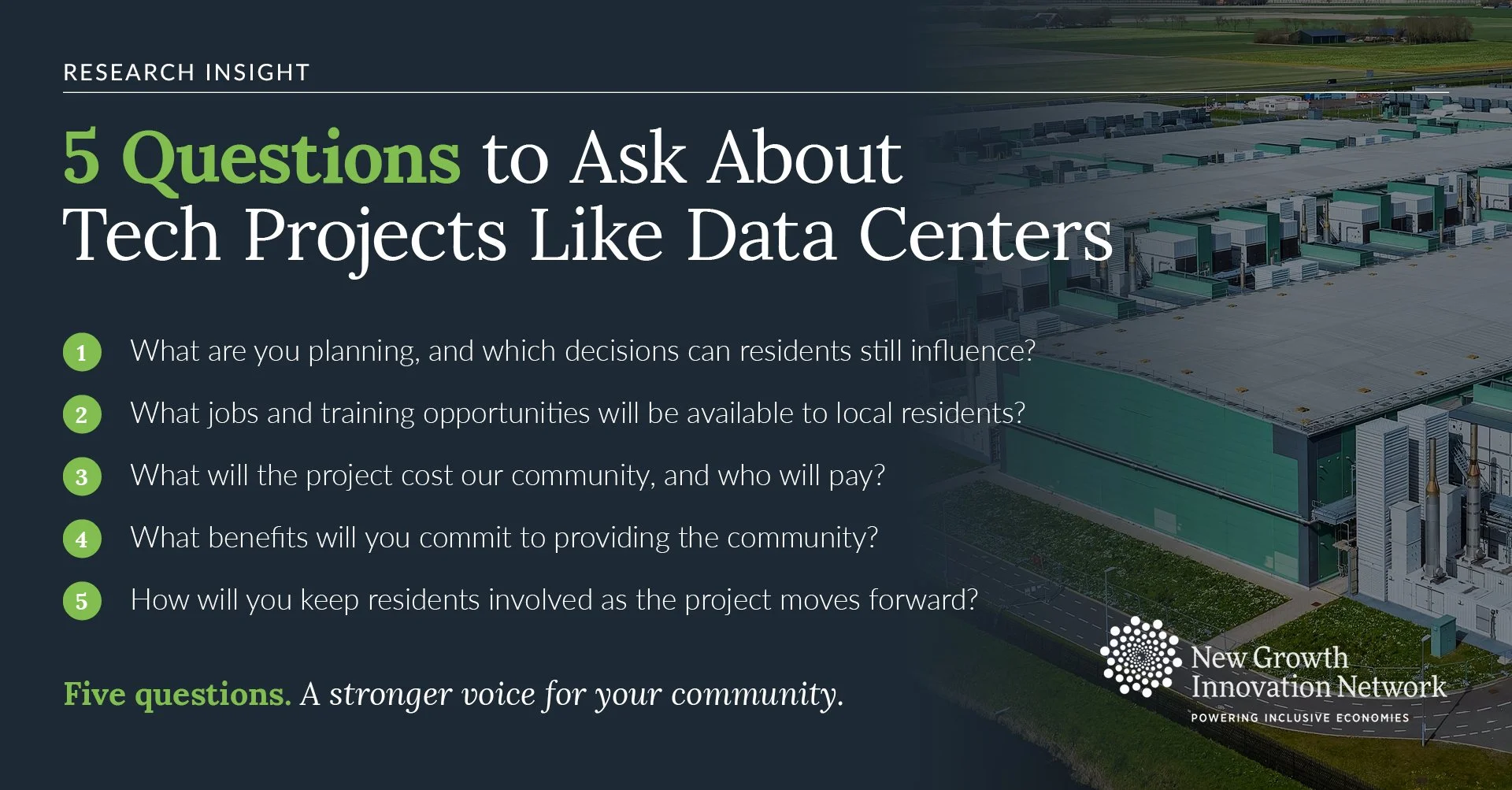
Five Questions CBOs Should Ask About Data Centers or Other Tech Projects
What are you planning, and which decisions can residents still influence?
Find out which decisions have already been made and which are still open to community input. If details cannot be shared because of an NDA, ask when and how that information will be available.
What jobs and training opportunities will be available to local residents?
Ask how many jobs will be permanent rather than construction-only, what they'll pay, and what qualifications they’ll require. Will local job seekers need a four-year degree? What training will be available?
In North Carolina, participants in NGIN’s research expressed greater confidence in local access to regenerative medicine jobs, in part because the state has promoted biotechnology career pathways that don’t always require a college degree. Ask whether local schools, community colleges, and workforce programs will help prepare residents for the jobs being created.
What will the project cost our community, and who will pay?
Ask about electricity and water demand, roads, housing, and other infrastructure needs. What noise or environmental impacts are expected, and how will they be addressed? Find out whether public funding or tax incentives are involved and who will pay for necessary improvements. These questions are especially important for data centers, where electricity and water use can be significant.
What benefits will you commit to providing the community?
Some cities and counties negotiate community benefits agreements that outline commitments such as local hiring, job training, contracts for small businesses, or investments in schools and infrastructure. Ask what commitments will be put in writing, who will be responsible for delivering them, and how progress will be measured.
A project's value shouldn’t be judged by job numbers alone. Investments that strengthen local businesses, expand training opportunities, or address longstanding community needs can also make a meaningful difference.
How will you keep residents involved as the project moves forward?
A single public meeting isn’t enough to maintain community engagement throughout a project that may take years to develop. Ask whether residents and CBOs will have seats on the advisory groups, receive regular updates, and have opportunities to raise concerns as plans move forward.
What to Watch For in Developers’ Answers
As your organization gathers information, pay attention to these warning signs:
Decisions are already final. Residents learn about the project after agreements have been reached, with little opportunity to provide input.
Promises lack details. Job projections come without clear information about qualifications, timelines, or local hiring. Community benefits are discussed but never put in writing.
Community engagement is limited. Communication happens primarily through social media or a single public meeting, with no plan for continued involvement.
Why Do Communities Push Back on Technology-Based Economic Development Projects?
Decisions happen out of view. Negotiations for technology-based economic development projects, from advanced manufacturing and biotechnology facilities to data centers, often take place before residents hear the details. Nondisclosure agreements (NDAs) can further limit what officials share. NGIN's research also found that many economic developers communicate primarily with their core partners. This can leave CBOs and other community representatives outside early conversations, even though they bring valuable perspectives about local needs and priorities. When residents learn about projects after key decisions have been made, distrust can follow.
Costs show up before benefits. Depending on the project, residents may face construction traffic, greater demand for electricity and water, and pressure on housing and local infrastructure. Promised jobs and economic benefits may be years away, and residents want to understand what their community will receive in exchange for the resources a project requires.
People remember past promises. Previous tech-based development projects can shape how residents view new proposals. "We have an industrial park close by that we've been trying to develop for the last 20 years," one educator in our research said, "but it starts and stops with not a lot of jobs."
The benefits may be difficult to picture. NGIN's research found differences in how communities understood emerging industries. In North Carolina, participants could more readily connect regenerative medicine to their own health and potential job opportunities. In Central Florida, some participants had difficulty seeing how semiconductor development might benefit them or whether residents would qualify for highly technical positions.
Understanding these concerns gives CBOs a starting point for advocating on behalf of their communities. By asking questions early, they can help economic developers and project leaders understand local priorities and consider them before plans are finalized.
How Your Organization Can Advocate
Community-based organizations bring first-hand knowledge of local needs to economic development discussions. They understand the challenges residents face, where infrastructure is already stretched, and which community needs have gone unmet.
Early CBO involvement can help economic developers and project leaders make better-informed decisions, improve transparency, and consider community priorities as investments take shape. Involvement may not eliminate opposition, but it can build trust and lead to projects that better serve communities.
There are several ways your organization can help shape those conversations:
Ask for a seat at the table. Contact city and regional leaders to find out when community input can influence decisions. Ask whether CBOs will be represented on advisory groups or planning committees.
Bring residents' concerns forward. Talk with the people your organization serves. For example, host a data center town hall event. Share those perspectives with decision-makers and ask how they will be addressed.
Take answers back to residents. Share what you learn from developers and public officials, including what has been decided, what remains open for discussion, and which commitments have been made. When questions remain unanswered, continue seeking clarification and keep residents informed.
Connect investments to local opportunities. As data centers, innovation hubs, and other technology initiatives develop, work with schools, workforce programs, and economic developers to identify how residents can prepare for new jobs and how local businesses might benefit.
Seek support for community engagement. Meaningful participation takes time and resources. Ask whether funding is available to support outreach, planning, and workforce development. Economic development grants may help fund this work, particularly when CBOs partner with other regional organizations.
Build partnerships and stay involved. Connect with other CBOs to strengthen your voice. NGIN's guide to coalition building offers practical advice for getting started. Continue participating as projects move from planning to implementation so community priorities remain part of the conversation.
Learn from other places. Connect with CBOs in other regions participating in NSF Engines initiatives to learn how they’re approaching community engagement.
Make Sure Your Community Has a Voice
Knowing what questions to ask is a good starting point. Getting the right people together to answer them is often more difficult. Learn how NGIN can help your community prepare for AI and emerging technology investments, evaluate opportunities, and develop strategies that benefit local businesses, workers, and residents. If your community is preparing for a major technology investment, talk with NGIN about how to get involved.
You can also share NGIN's Regional Engagement for Tech-Based Economic Development Action Guide with local leaders to help guide the conversation.
For a closer look at the research, read the full report.