
Written by New Growth Innovation Network
Community buy-in for technology-based economic development investments begins with early, meaningful engagement. Economic developers and city leaders can attract funding, invest in emerging industries, and develop innovative partnerships, but long-term success also depends on whether residents understand these initiatives, see opportunities for themselves, and have a voice in shaping their community’s future.
New Growth Innovation Network’s (NGIN) research with the National Science Foundation’s (NSF) Regional Innovation Engines program illustrates this challenge. While these initiatives are designed to advance emerging technologies and strengthen regional economies, the people living in these communities may know little about the work taking place or how they may benefit.
Building community buy-in requires more than explaining a project. For economic developers, community-based organizations (CBOs), and city leaders, it means listening to concerns, identifying barriers to participation, and involving them in decisions about growth.
These efforts are especially important as regions pursue new technologies and industries that may take years to produce widespread economic benefits. Community buy-in for economic development means residents, local organizations, and city leaders understand the work, see how it affects them, and help shape it. Below, we look at why that support is hard to earn, what our research found works, and what EDOs, CBOs, and city leaders can do now.
Why Is Community Buy-In So Hard to Earn?
Community buy-in can be difficult to achieve because the benefits of technology-based economic development often take years to materialize. Before new jobs become available, emerging technologies must move from research to commercialization, businesses need time to grow, and workers may need specialized training. That long timeline can make it challenging for residents to understand how an initiative will affect their community.
For economic developers, community advocates, and city leaders, the challenge is engaging residents well before those benefits become visible. Clear communication is important, but so is giving local organizations and residents opportunities to share their priorities, identify barriers to participation, and help shape plans for growth.
The same need for early engagement applies to large-scale artificial intelligence (AI) investments in communities, such as data centers and associated energy infrastructure. As AI changes how businesses operate and the skills workers need, community engagement can help leaders understand residents’ and businesses’ concerns and expectations.
Read our blog on: AI Readiness for Local Economies: Expanding Opportunity, Agency, and Trust
Three Ways to Build Community Buy-In
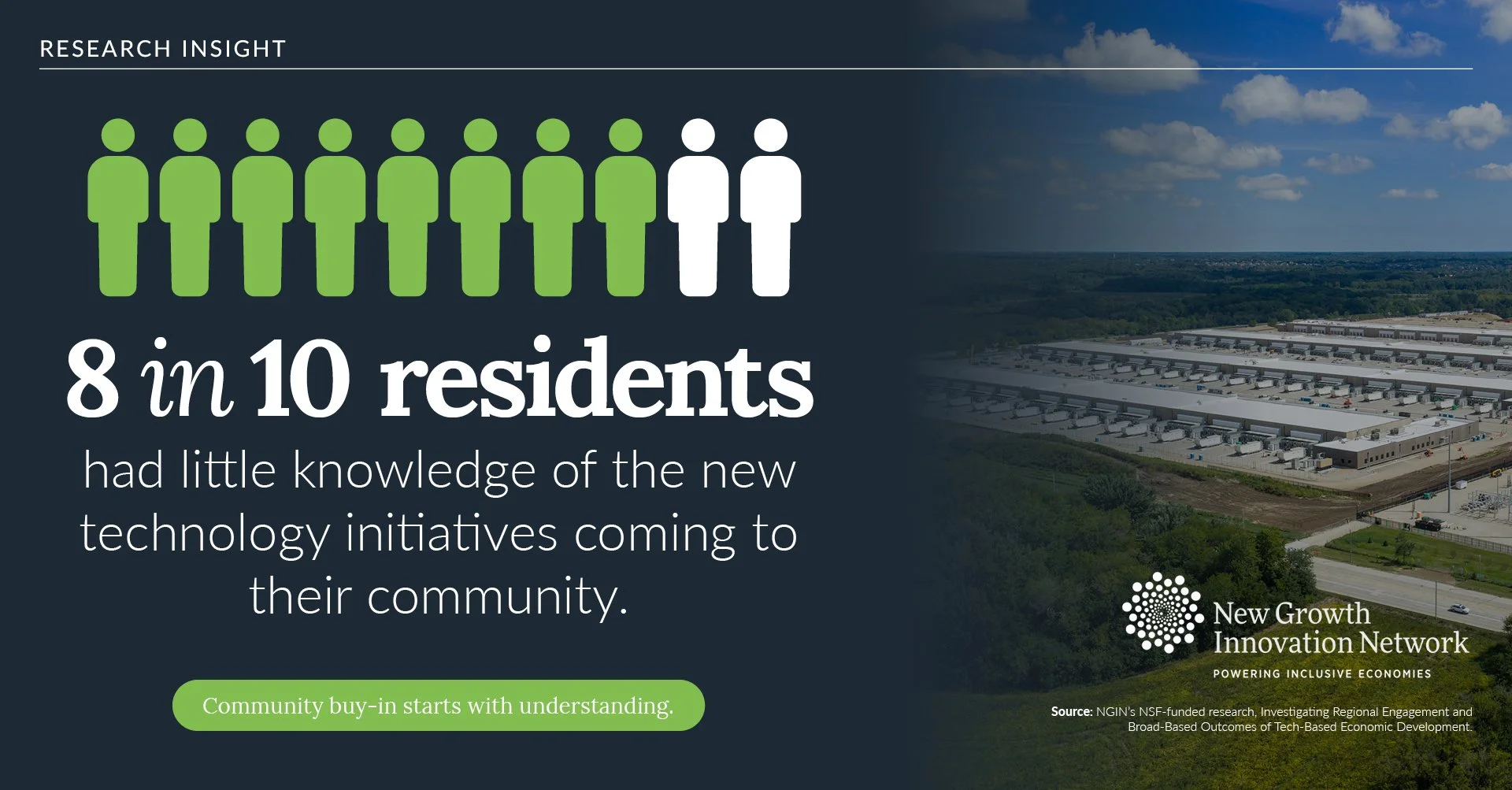
NGIN’s NSF-funded report, Investigating Regional Engagement and Broad-Based Outcomes of Tech-Based Economic Development, draws on research conducted with 35 community members near two of NSF Engines, the Florida Semiconductor Engine in Osceola County and the Regenerative Medicine Engine in North Carolina, to identify community engagement best practices that economic developers, CBOs, and city leaders can use to strengthen local participation. Most of the 35 participants worked in economic development, workforce development, or education.
Even so, 82% rated their knowledge of their Engine's core technology as low.
Tip #1: Partner with Organizations Communities Already Trust
Economic development leaders may understand the potential of an emerging industry, but residents don't necessarily turn to them for information about jobs, training, or neighborhood concerns. That's where trusted local organizations can help. Chambers of commerce, schools, workforce programs, and CBOs serve as intermediaries connecting technology initiatives with people who might otherwise be difficult to reach.These connections build what researchers call bridging social capital: relationships that link groups with different networks, resources, and perspectives. They help information and feedback move between residents and technology initiative leaders.
In Osceola County, a local chamber of commerce held nine Capital Access Program sessions at NeoCity, a technology district associated with the Florida Semiconductor Engine. For many participants, attending sessions at NeoCity was their first introduction to the facility. The sessions also created opportunities to discuss the technology initiative and the work taking place there. These connections work in both directions. Local organizations can explain emerging technologies and opportunities to residents while sharing residents’ questions and concerns with economic development leaders. For regions pursuing technology-driven growth, identifying and working with these trusted partners is an important early step.
Tip #2: Listen to Community Priorities and Set Realistic Expectations
New technology initiatives can generate excitement about future jobs and economic growth. But communities also bring experiences from previous development efforts, including projects whose promised benefits never materialized.
In the Florida Semiconductor Engine region, some residents worried that new jobs would go to highly educated newcomers rather than local workers. Others raised concerns about rising housing costs. These are practical concerns about who will benefit from growth. Economic development leaders can start by explaining what an initiative is expected to accomplish, when opportunities might become available, and what qualifications workers may need.
Equally important is acknowledging what remains uncertain. Early-stage technologies may not produce widespread employment immediately, and overpromising more than an initiative can deliver can undermine credibility. Regular conversations with residents, small businesses, workforce organizations, and other community partners can help leaders identify concerns and adjust plans as development progresses.
Tip #3: Bring Local Expertise Into Planning and Decision-Making
The people closest to a community often understand challenges that regional planners and technology leaders may overlook. Transportation, childcare, access to training, and affordable housing can all affect whether residents can take advantage of new opportunities.
Local knowledge matters. In North Carolina, a workforce development leader described a training grant that provided $2,500 per participant for transportation and childcare. For someone traveling from a rural county to a training program several counties away, that amount could fall far short of what was needed.
Including community and workforce leaders in planning discussions can reveal obstacles before programs launch. It also allows regional partners to develop solutions that reflect the circumstances of the people they hope to reach. For technology-based economic development initiatives, community participation should influence decisions about workforce pathways, partnerships, and investments, rather than begin after those decisions have already been made.

Start Building Community Engagement Before the Jobs Arrive
One of the challenges facing technology-based economic development is the time between an initial investment and the economic opportunities it may eventually create.
For regions involved in emerging industries, that period presents an opportunity to prepare. These community engagement strategies offer practical ways to begin:
For EDOs and economic developers:
Open your doors. Work with technology partners to invite residents, workers, and local organizations to tour facilities and ask questions.
Be specific about timing. Share realistic timelines and the kinds of roles you expect, including ones that don't require a college degree.
For CBOs and community advocates:
See it for yourself. Visit facilities in person so you can explain them to the people you serve.
Be a two-way link. Share what you learn with your community and bring its questions back to the initiative.
For city leaders:
Plan for growth concerns. Work with partners on housing, transportation, and infrastructure as initiatives develop.
Bring partners to the table. Coalition building across EDOs, schools, and CBOs can strengthen regional collaboration. NGIN’s Economic Partnership Diagnostic and Economic Partnership Playbook offer resources to help leaders access partnerships and identify opportunities to work together.
From Community Buy-In to Community Readiness
Community engagement should inform what regional leaders do next. Conversations with residents and local organizations can reveal gaps in training, barriers facing small businesses, and concerns that could limit participation in new industries.
These insights are a starting point for a community needs assessment. Paired with information about the local workforce, businesses, and available resources, they help leaders answer practical questions: Where is the region prepared for growth? What gaps could prevent residents and businesses from benefiting? Which partnerships and investments should come first?
NGIN helps communities move from engagement to a practical plan. Through its Readiness Assessment & Action Plan, NGIN works with city, county, and regional leaders to review their workforce, small businesses, and local leadership. The result is a clear game plan showing where AI and other emerging technologies could create opportunity, disrupt economic activity, or widen existing gaps, and which steps to take first.