
Community Investment Vehicles: A Practitioner Field Guide on Community-Owned Real Estate

Written by Lyneir Richardson and Cuevas Peacock
This practitioner field guide is based on New Growth Innovation Network’s (NGIN) SCALE program session held on February 3, 2026, led by Cuevas Peacock (New Growth Innovation Network) and Lyneir Richardson (Chicago TREND). The session featured insights from Brian Murray (Shift Capital/Kensington Corridor Trust), John W. Haines (Mercy Corps Northwest/Community Investment Trust), Nikishka Iyengar (The Guild/Community Stewardship Trust), and Jeffrey Mendelsohn (Local Code).
How do residents of a neighborhood become real owners of the places that shape their daily lives, in a way that is financially viable, legally defensible, and trustworthy enough to scale and provide a pathway to building wealth? Real estate models that democratize ownership and governance of assets, also called shared ownership or community ownership approaches, are gaining traction in the United States. Researchers at the University of Miami have mapped community ownership projects and the necessary conditions for project success across multiple cities, cataloging more than 300 community ownership organizations and estimating the value of community-held assets nationally at between $10 and $11 billion.
As part of its SCALE program, New Growth Innovation Network (NGIN) convened the current cohort to share about community investment vehicles (CIVs), diving deep into five models and its legal, financial, and governance scaffolding. This Practitioner Field Guide translates the insights from this session into a practical reference note that community and economic development professionals can use as they decide what model fits their neighborhood, what conversations they need to be having now, and what infrastructure they will need to put in place.
What are Community Investment Vehicles?
A community investment vehicle (CIV) is a legal and financial structure that lets the people who live in a place become investors and part-owners of it. A CIV pools money from residents, and sometimes from mission-aligned outside investors, then puts it to work acquiring and stewarding neighborhood assets: a commercial building, a block of housing, a corner store, a parcel of land. What sets these vehicles apart from conventional real estate finance is the pairing of local ownership with democratic governance; the payoff is measured not only in dollars returned but who ends up holding the stake.
The term Community Investment Vehicle, as used here, builds on the framework developed by Community Desk Chicago, which defined CIVs as an umbrella category for shared-ownership commercial real estate structures that enable collective community investment in neighborhood assets.
Source: Community Desk Chicago. Community Investment Vehicles Playbook: How to Leverage Community Ownership Models to Raise Capital and Control Real Estate Assets. Chicago: Community Desk Chicago, 2022.
CIVs have three essential components — site control, financial modeling, and community organizing — and successful initiatives weave all three through every decision. CIVs can be perpetual purpose trusts, public benefit corporations, cooperatives, project-level LLCs, and pooled loan or investment funds. Type of structure is based on its fit with federal and state laws, community priorities, and the financial goals relating to return on investment. The five models in this report span that range. What unites them is the intent to keep an asset affordable and under local control, to build wealth for residents who have long been shut out of ownership, or, most often, to do both at the same time. That dual intent is what lets a CIV work as both a redistributive and a predistributive tool. Inviting wealthier, accredited investors to put money into the neighborhoods around them moves existing wealth back toward the community. Opening ownership to lower-income residents who could never buy it alone changes who builds wealth in the first place. Either way, the governance tends to be more participatory than in a typical development deal: residents sit on the boards and advisory bodies that decide what gets built, who it serves, and where any surplus goes.
Prior to legal structure or capital stacks comes vision: a community has to decide what it is actually trying to win. Is the goal to preserve affordability, keeping homes, storefronts, and land within reach of the people who already live there as the market around them climbs? Is it to create opportunities to build wealth, open ownership and financial returns to residents who have long been shut out of both? Is it to maintain community control, so that decisions about what gets built, who it serves, and how any surplus is spent stay in local hands for good? Most communities want some component of each, but the order in which they rank them shapes everything that follows: which model fits, who belongs at the table, and how patient the capital has to be. Naming that vision first, with residents rather than for them, is what keeps the vehicle accountable to the people it is meant to serve.
Community Investment Models in Action
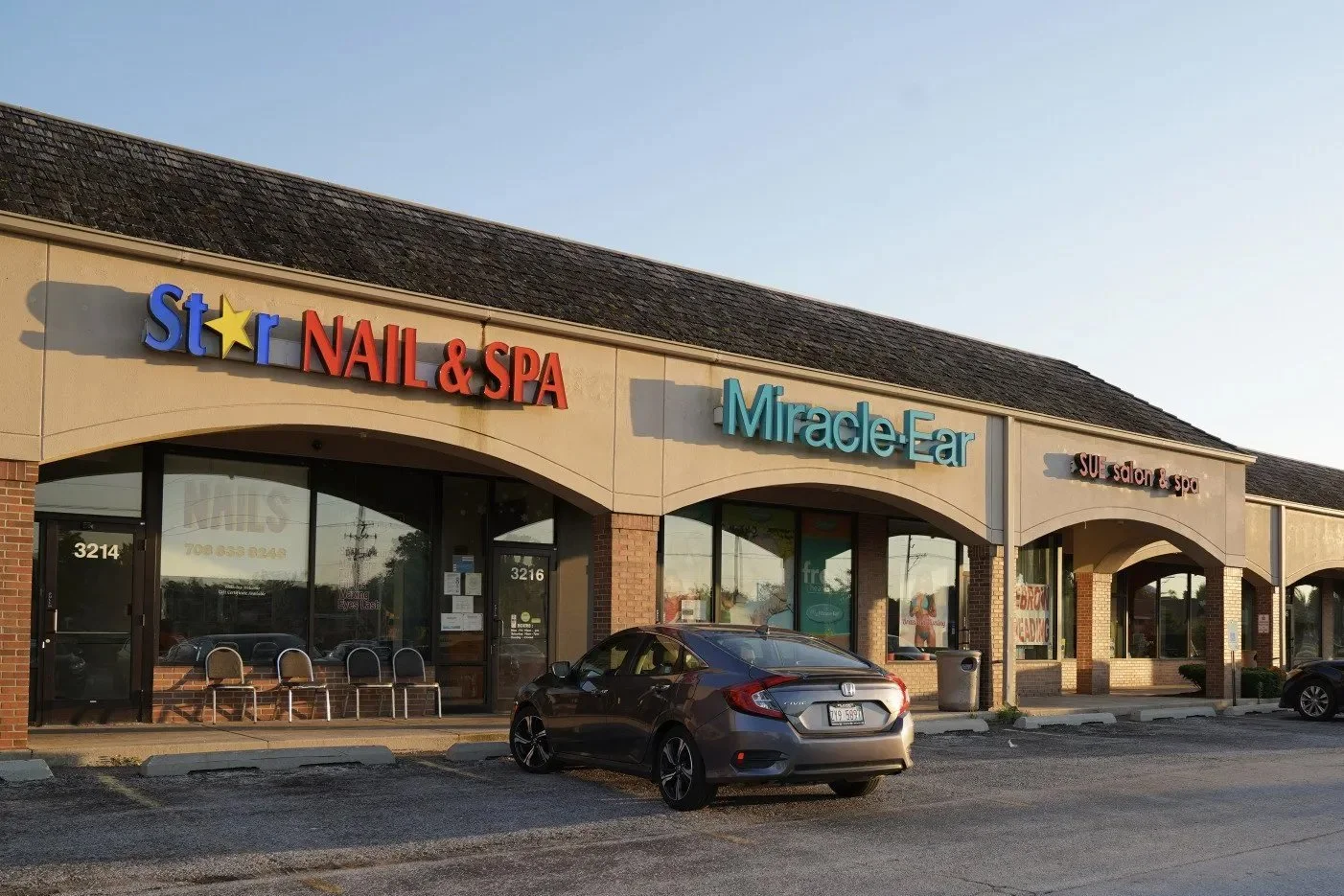
Butterfield Plaza shopping center in Illinois owned by Chicago TREND
Most CIV models are built on answers to questions like who can invest, who governs, how investment returns work, how capital is protected, and whether community ownership is the entry point or the destination. Here are a few notable examples.
-
The Chicago TREND Corporation (TREND) acquires neighborhood shopping centers and invites residents of low- and moderate-income communities and non-accredited investors to invest as little as $1,000 for a direct equity stake, alongside institutional capital. TREND provides 51% to 95% of the required equity, secures and guarantees mortgage financing, and operates the properties. Its nonprofit affiliate delivers community investor services (surveys, outreach, education and reporting), small business support and programming to strengthen the neighborhood around each shopping center. TREND has acquired six shopping centers in Chicago, Baltimore and Columbus and invested more than $13 million to improve those properties. It has brought 462 community investors into ownership through SEC registered offerings, with 70 percent identifying as Black and 47 percent as women. TREND has paid a 6% distribution from cash flow to community investors.
Also, on its first portfolio exit, TREND delivered a 5X multiple on invested capital to its community investors. TREND now holds a $40million portfolio with $12.7 million in committed equity capital from philanthropic organizations and impact investors. TREND is the right reference when a developer, for-profit or nonprofit, leads a project focused on strengthening the neighborhood, giving community investors market rate financial returns and a voice in governance, without formal decision-making authority. (Co-author Lyneir Richardson is CEO and Founder of Chicago TREND.)
-
Kensington Corridor Trust is the first perpetual purpose trust for real estate in the United States. Shift Capital, a B-certified mission-driven real estate firm with roughly $450 million in assets under management (AUM), helped seed the trust after concluding that a mission-oriented REIT could not protect a fragile neighborhood from gentrification pressure. The trust’s purpose is to preserve affordability and align the corridor with neighborhood priorities in perpetuity, not to chase the highest-paying tenant. This kind of structure takes years of legal and stakeholder work to build. For practitioners, the Kensington model is the right reference point when the priority is permanent neighborhood control of an asset and when the team has the patience and philanthropic backing to build the legal infrastructure and steward it indefinitely.
-
Community Investment Trust, or CIT, is positioned as “an equity shift, not a capital raise.” A nonprofit acquires a property, capitalizes it through conventional debt, and then, over time, shifts the down payment portion (in the original Portland project, 40 percent of the value, or roughly $450,000) into a localized stock offering at $10 a share. Investors subscribe at $10, $25, $50, or $100 a month, earn annual dividends from the property’s performance, and benefit from share-price appreciation. The CIT uses the A2 exemption from federal securities registration (a 1933 provision Mercy Corps revived for this purpose) to make the offering open to non-accredited, low-income investors. Liquidity is guaranteed by a direct-pay letter of credit, underwritten against the primary mortgage on the building, that stands behind the full value of the shares at all times. After nine years, the model has reached more than 350 investors representing roughly 1,200 to 1,300 family members, with share value more than doubling since launch. Mercy Corps now supports replication through a cohort-based feasibility study process of three to four cities at a time and is currently coaching CITs in Albany, Dallas, Omaha, Minneapolis, Salt Lake City, and Charlottesville. The CIT is the right reference when a direct-pay letter of credit can be obtained to support the goal of direct, low-dollar individual investment by residents who have historically been locked out of ownership.
-
Community Stewardship Trust (CST) is the Guild’s adaptation of the CIT for the legal and demographic realities of Atlanta. Because Georgia does not have a workable cooperative statute outside of rural electric co-ops, the Guild structured the CST as a public benefit corporation with cooperative bylaws (i.e., one person, one vote) and the community consisting of those who live, work, play or pray in the neighborhood as its shareholders. The model uses two share classes: a Community class for residents at or below 80 percent of area median income, with one-year liquidity, and a Solidarity class for higher-income investors, with a five-year hold. Returns are similar across both classes; what varies is access to liquidity4. The trust will pay annual dividends from net operating income and shares property-value appreciation with investors. The flagship project, in Atlanta’s historically Black Capital View neighborhood, brought a vacant 100-year-old building with a plan to bring it back to life with two stories of permanently affordable housing (at 60 percent area median income) on top of a Black-owned grocery store and three Black-owned restaurant kitchens. The design was developed through pandemic-era charrettes, block parties, mutual-aid distributions, and a mural where residents wrote what they wanted the building to become. Governance runs through two boards: a Board of Directors for fiduciary and legal matters, and a Stewardship Board for property-level decisions including rent-setting, tenant approval, and surplus cash flow allocation. The CST is the right reference when commercial and mixed-use property can be paired with deep, ongoing community governance.
-
Local Code is a national patient-capital and technical-assistance partner, currently focused on bringing to fruition a $500 million development pipeline along Kansas City’s Prospect corridor. The flagship LADD project is a 3.6-acre city block built around a vacant 1920 school building. A a local fourth-generation developer is working to use a “capital-transition” rather than a “capital-raise” model. Outside accredited investors will initially capitalize the project through the Local Code Kansas City(LCKC) Development Fund 5and that will accept a capped 6 percent buyback. Once the project stabilizes and becomes profitable, ownership transfers to the community through a direct public offering. The community can buy in after the highest-risk period, with the building’s own track record serving as the backstop. Local Code seeded the deal with a $500,000 patient bridge loan that funded both site acquisition and the local development team’s salaries, then helped raise an additional $2 million in equity and $2.5 million in grants. Local Code is now launching a Structural Equity Initiative to provide subordinated patient debt and guarantees nationally. The capital-transition model is the right reference when the project is too large or too risky to ask first-time community investors to absorb the construction phase, but its ultimate purpose is still neighborhood ownership.
A Comparison of Community Investment Models
The five models are best understood as a menu of trade-offs rather than competing answers. The table below summarizes the variables practitioners will need to weigh as they decide which model or combination fits their neighborhood.
| Variable | Kensington Corridor Trust | Community Investment Trust | Community Stewardship Trust | Capital Transition (Local Code) | TREND (Real Estate Fund) |
|---|---|---|---|---|---|
| Legal vehicle | Perpetual purpose trust | Nonprofit-led equity offering under 3A2 federal securities law exemption | Public benefit corporation with co-op bylaws | Project LLC + direct public offering at transition | For-profit equity fund paired with a nonprofit affiliate; SEC registered offering |
| Who can invest | No individual investors; trust holds the property | Local residents, $10–$100/month subscription | Two share classes based on area median income; locally based | Accredited at construction, community at stabilization | Local residents, non-accredited investors with at least $1,000, and institutional impact investors with at least $250,000 |
| Governance priority | Permanent corridor stewardship | Belonging through ownership8 | Dual-board democratic control | Locally chosen; varies by project | Voice in governance, without formal decision-making authority. |
| Return design | Community benefit, no investor financial return | Dividends + share-price appreciation, $5K cap | Dividends from NOI + appreciation | ~6% dividend, ~6–7% appreciation post-transition | ~6% annual distributions and 3X multiple on money invested at exit |
| Investor protection | Trust beneficiary structure | Direct-pay letter of credit; cash-out at any time | Philanthropic backstop to prevent loss of investor principal | De-risking via post-stabilization entry | Investor can lose their initial investment |
| Best fit when | Permanent affordability of a corridor is the top priority | First-time, low-dollar investors are the desired investors | Community governance must be ongoing, not just initial | Project is too large or risky for community to absorb early | Dual focus on strengthening the neighborhood and market rate return on investment |
Scroll to the right to see full table if viewing on mobile.
CIV Readiness Check
Practitioners can use the questions below as a decision framework that surfaces, rather than resolves, the trade- off. Answer these questions in order.
The answers will point toward one of the five models or, more likely, a hybrid that borrows governance from one, financial design from another, and replication infrastructure from a third.
What strategy is best to strengthen the neighborhood by owning commercial real estate assets?
Who is the community of people we are trying to make owners — specific demographic at specific income levels, a broader stakeholder group, etc.?
Is the priority permanent stewardship of the asset, individual wealth-building for residents, or some combination of the two?
What legal vehicle is realistic given federal and state securities and entity statutes, and who do we need at the table to navigate them?
What is the trade-off between offering community investors a backstop to prevent people from losing their invested capital vs getting a market rate return on their investment?
Field Notes: What Practitioners Should Know
Key considerations and lessons drawn from across community investment vehicle models to help practitioners design, evaluate, and implement approaches that fit their communities.
-
In every model, the legal and financial vehicle was built around an asset that the developer already owned, had a contractual right to buy or had a credible path to securing ownership. Shift Capital raised a fund before they had clarity on the vehicle for KCT. The CIT in Portland worked because Mercy Corps could buy and capitalize the Plaza 122 strip mall. The Guild’s Capital View project required acquiring a vacant building in advance of a co-design process. Local Code seeded LADD with a $500,000 bridge loan that bought a full city block for $300,000 before the financing structure was finalized. TREND formed a real estate fund that empowered it to sign a purchase and sale agreement, complete due diligence and financial underwriting, and invite community investors once the business plan is set. Practitioners should treat early site control through option agreements, low-cost bridge loans, philanthropic acquisition capital, or direct purchase as the prerequisite that makes everything else possible. Without it, the vehicle is an abstraction.
-
Each model lives or dies by the legal mechanism that lets non-accredited residents invest. The CIT relies on the federal 3A2 exemption combined with a direct-pay letter of credit. The CST uses Georgia’s state-level securities exemption (Pennsylvania has its own analogous version, used by the Guild’s Philadelphia replication). Local Code proposes to use a direct federal or state public offering at the community-transition phase. Shift Capital used Small Change the Small Change platform for $100-minimum offerings under federal securities regulations. TREND also used Small Change to bring 462 community investors into its shopping centers through SEC registered offerings. Practitioners exploring CIVs should engage securities counsel early, before the project shape is fixed, and map which federal or state exemptions are best to accomplish the goals of their projects. The legal architecture will quietly determine whether the model can serve the residents the project is intended to benefit.
-
When forming a CIV, a decision needs to be made about whether a backstop can be put in place so that community investors do not have to absorb the risk of losing their investment. The CIT's direct-pay letter of credit is unique and noteworthy because it guarantees full principal return to community investors. The CST's philanthropic reserve guarantees return of principal but not appreciation. Local Code's capital-transition model uses timing as the backstop, letting community investors enter only after stabilization. TREND offers no principal return guarantee, and community investors can lose their initial investment in exchange for market rate returns. Practitioners should not design a CIV without a clear answer to the question, "If a single mother loses her $1,000, what happens?" That answer shapes which philanthropic partners need to be at the table, what reserves need to be raised, and how the offering can be marketed to the residents who are invited to access toownership. If it is determined that the investors do do not have the capacity to absorb losses, a backstop must be obtained. TREND's model shows that when a backstop cannot be obtained It has to be disclosed plainly and offered as a choice, not discovered as a surprise.
-
The Guild’s two-board structure separates fiduciary governance from property-level community decision-making, allowing investors to vote on commercial tenants and decide whether surplus cash flow funds a delivery van for the grocery store or an additional dividend. Local Code defers governance design to the local team because the right structure depends on what the community is trying to protect. The speakers shared candidly that the cooperative model used in business ownership (one-vote-per-member) are difficult to finance for real estate and tend to work better in narrower sectors where financial returns are not the priority. TREND takes a different approach by retaining formal decision-making authority as developer and asset manager, while giving community investors a voice through surveys, investor meetings and regular reporting rather than a governance seat. Practitioners should treat governance as a design choice and outline who decides what, when, and with what authority rather than as a checkbox at the end.
-
The Guild’s Capital View building was designed through pandemic-era food distributions, mutual-aid drops, and murals where residents wrote what they wanted the corner to become. The result is a Black-owned grocery, three Black-owned restaurant kitchens, and permanently affordable housing at 60 percent of area median income. It is not a marketing exercise but a direct translation of resident input into a financed building. Local Code’s LADD project came out of neighborhood association meetings led by a fourth-generation resident developer. Mercy Corps invests heavily in its “Owing to Owning” curriculum so that first-time investors have a real foundation before they commit. TREND forms community advisory councils and surveys of resident investors has resulted in the opening of 23 stores and restaurants owned by Black entrepreneurs and locally-owned businesses. Quarterly community investor meetings are also held to build financial knowledge, community cohesion, and an ownership mindset among the residents who hold a stake in its shopping centers. Practitioners should plan for the cost of co-design and resident education from the beginning, not as a separate community-engagement line-item but as part of the development budget.
-
None of the projects was financed without a layered capital stack that included grants and/or concessionary capital sources capital. LADD’s capital stack includes three different types of tax-credit financing, senior debt, public grants, private grants, the LCKC Development Fund equity, deferred developer fees, and Local Code’s national bridge loan. Capital View combines philanthropic backstop, philanthropic grant equity, mission debt, and community equity. The CIT layers a conventional mortgage with a direct-pay letter of credit and resident equity. TREND layers an equity fund and foundation grants from MacArthur, Kresge, McKnight, Surdna, Pritzker Traubert, and Dodge, corporate grants from JPMorgan Chase and Prudential, public sector grants, in addition to the direct community equity across its portfolio. Practitioners should expect to assemble three to seven sources of capital, each with different patience, return expectations, and reporting requirements. National organizations like Local Code, Mercy Corps, the Guild and TREND are now expanding beyond their pilot communities to provide the subordinated, patient, and guarantee-style capital that local CDFIs and traditional debt cannot.
-
Four of the five organizations are actively replicating their models. Mercy Corps takes three or four cities through a structured CIT feasibility study with curricula, financial templates, and legal frameworks shared openly. The Guild is expanding to Philadelphia and Memphis. Local Code expects to be in three additional cities by year-end. TREND Corporation has been hired by nine cities, economic development organizations, and place-based community development corporations to craft and implement inclusive ownership strategies and guide in the structuring of community investment vehicles. Practitioners do not need to reinvent these structures from scratch if these models make sense for their communitythrough partnerships with these organizations.
Conclusion
Start with the community itself. Remember that the slowest parts of building community ownership are the ones that decide whether it happens at all. The visioning, organizing, and early design have to come first, and they happen with residents, in parallel with any conversation with developers, lenders, or counsel.
Lyneir Richardson’s reflection sums it up well that this work “is about doing capitalism just a little bit differently” and democratizing ownership so the system serves more people. For practitioners, that ambition translates into a discipline: choose the model that fits the community, build the legal and financial scaffolding patiently, share governance authentically, and protect first-time investors as if your own family were investing. The four innovators on the panel have demonstrated that each of those choices can be made well, and that the resulting projects can be both financially viable and genuinely community owned.