Community Wealth Building Is Economic Development: Five Ways Communities Can Keep Wealth Local
Insights from Cityscapes Summit 2026 Workshop: Action Planning for Community Wealth Building
By: Beka Burton, Advisor - NGIN
Economic development professionals often spend significant time chasing growth: recruiting employers, attracting investment, securing grants, and competing for the next major project. Yet a question raised repeatedly during Cityscapes 2026 challenged a core assumption underlying much of that work: What if the real challenge isn't attracting wealth—but keeping it?
Across a presentation session and working session hosted by The Democracy Collaborative, participants explored Community Wealth Building (CWB), a framework that shifts economic development from a focus on growth alone toward a focus on ownership, participation, and local wealth retention. While the concept has been gaining traction internationally, particularly in the United Kingdom and Scotland, its roots stretch back more than two decades to Cleveland, Ohio, where practitioners began asking how local institutions could better support the communities around them.
At its heart, Community Wealth Building asks a deceptively simple question:
Who benefits from economic activity in a community?
The answer matters because communities can experience growth without creating prosperity. New investment can arrive while local ownership declines. Property values can increase while longtime residents struggle to remain. Jobs can be created while decision-making power remains concentrated elsewhere.
CWB offers a path that prioritizes local ownership, democratic participation, and economic systems designed to circulate wealth rather than extract it.
The Challenge: Communities Leak Wealth Every Day
Many communities spend years trying to attract outside capital while overlooking how much money already leaves their local economy.
During the workshop, participants discussed the difference between economic activity that remains rooted in place and activity that is designed primarily to generate returns elsewhere. The concern was not simply about corporations versus small businesses. Rather, it was about understanding the systems that determine where wealth ultimately accumulates.
Research referenced by the Democracy Collaborative found that when $100 is spent at a large chain retailer, only a small portion remains circulating within the local economy. When that same $100 is spent at a locally owned business, substantially more of it continues recirculating through local wages, suppliers, and community spending. The lesson is not that outside investment is inherently bad. Rather, communities should pay equal attention to how money flows after it arrives.
As one participant observed, many places continue searching for new opportunities while vacant buildings sit unused, local institutions bank elsewhere, and community assets remain disconnected from community goals.
Community Wealth Building's Five Pillars
The Democracy Collaborative organizes Community Wealth Building (CWB) around five interconnected pillars:
Fair Work
Locally Rooted Finance
Just Use of Land and Property
Progressive Procurement
Inclusive and Democratic Enterprise
Rather than serving as separate initiatives, these pillars function as a framework for shifting economic systems toward broader participation and ownership.
Fair Work: Economic Development Starts with Workers
Instead of focusing solely on job creation, CWB asks whether jobs create economic security. Are workers earning living wages? Do they have opportunities to participate in decision-making? Do workplace practices contribute to long-term wealth building?
For anchor institutions such as universities, hospitals, governments, ports, and major nonprofits, these questions become especially important. If the largest employers in a community are not providing pathways to economic stability, broader wealth-building efforts become difficult to sustain.
This perspective aligns with a growing national conversation linking economic mobility, civic participation, and community well-being.
Locally Rooted Finance: Capital Should Know the Community
Participants explored the role of community banks, credit unions, CDFIs, pension funds, and community investment vehicles in shaping local economies. Where anchor institutions bank, where pension funds invest, and who receives access to capital all influence whether local wealth grows or leaves. The conversation highlighted institutions like Liberty Bank in New Orleans, one of the oldest Black-owned banks nationally, as examples of financial institutions that remain deeply connected to community needs. The broader takeaway was that financial decisions are never neutral.
An interesting tension emerged around emerging financial technologies. Participants discussed decentralized finance (DeFi), quadratic funding, and community-based investment pools as potential tools for democratizing access to capital. While some saw promise in these models, others raised concerns about speculation and accessibility. The conversation revealed another broader challenge facing practitioners: balancing innovation with trust and accountability.
The consensus was not that every community should embrace crypto or alternative financing structures. Rather, communities should actively examine what local financial tools already exist and determine how they can better serve community priorities.
Land and Property: From Asset Extraction to Community Stewardship
Few topics generated as much engagement as land.
Participants shared examples of vacant buildings, absentee landlords, heirs' property challenges, and underutilized community assets. These stories reflected a common frustration: communities often have resources but lack mechanisms to direct them toward community benefit. CWB encourages tools such as:
Community land trusts
Land banks
Community Benefits Agreements
Tenant opportunity programs
Community Development Financial Institutions (CDFIs)
These approaches move land from being treated solely as an investment vehicle toward being viewed as a community asset.
For many small and midsized cities facing housing pressures, disinvestment, or redevelopment concerns, this pillar may offer some of the most immediate opportunities for action.
Democratic Enterprise: Ownership Matters
Perhaps the most powerful theme throughout the workshop was ownership.
Worker cooperatives, employee-owned businesses, municipal enterprises, and low-profit companies were all discussed as models that distribute both wealth and decision-making power more broadly.
The conversation extended beyond economics into civic culture.
Burrell Poe challenged attendees to consider how often people actually experience democracy in daily life. Many individuals grow up in environments where major decisions are made for them—at home, in school, and in the workplace. If people rarely participate in decision-making, it becomes harder to imagine alternative systems.
This framing was particularly compelling because it positioned economic development as more than a strategy for growth. It becomes a strategy for participation. Worker ownership, cooperative enterprises, and shared governance models create opportunities for residents to exercise agency while building wealth.
Progressive Procurement: Small Decisions, Big Impact
The final pillar may also be the most accessible.
Progressive procurement asks anchor organizations to examine where they spend money.
Where is catering purchased? Which vendors receive contracts? Which suppliers benefit from institutional spending?
While procurement often feels administrative, participants repeatedly emphasized its power as an economic development tool. Anchor institutions collectively spend billions of dollars annually. Redirecting even a portion of that spending toward local businesses, minority-owned firms, worker cooperatives, or neighborhood suppliers can have significant multiplier effects. Importantly, progressive procurement does not require new funding. It simply requires different choices.
What Small and Midsized Cities Can Do Now
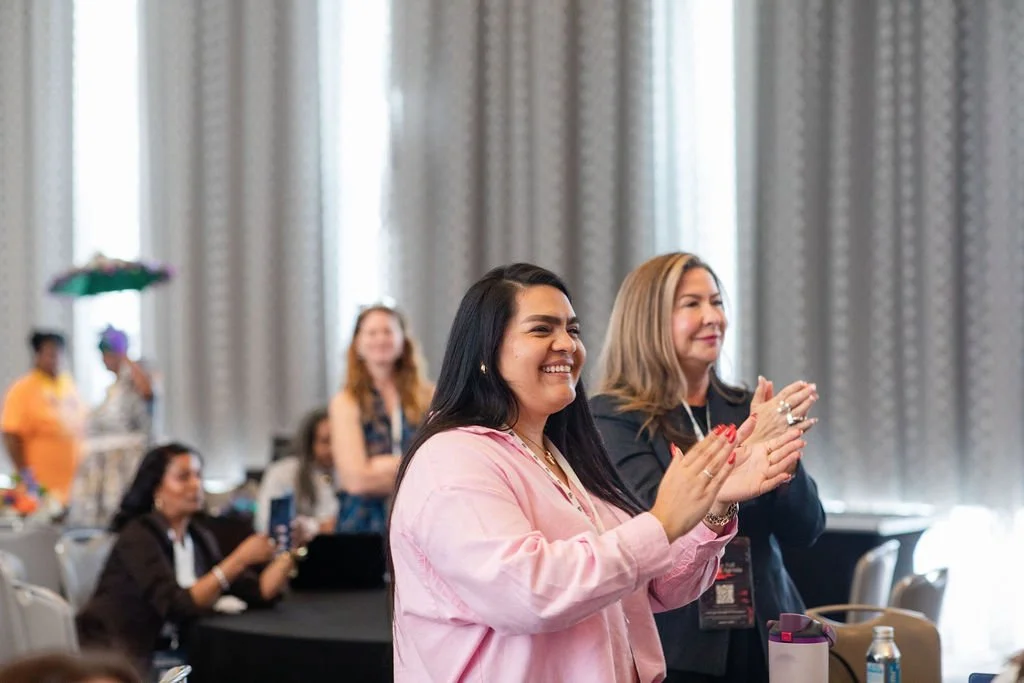
Some CWB strategies can feel ambitious, but one of the strongest messages from The Democracy Collaborative sessions was that many communities already possess pieces of the framework.
The challenge is connecting them.
For local leaders looking to begin, consider these five actions:
Map your anchor institutions and identify where they spend, hire, and invest.
Review procurement policies to identify opportunities for local purchasing.
Assess local ownership opportunities, including employee ownership transitions and cooperative development.
Inventory vacant and underutilized properties that could serve community priorities.
Explore community-based financial institutions and investment vehicles already operating locally.
Most importantly, start with the assets already present in your community.
As several participants noted, CWB is not about creating entirely new systems from scratch. In many cases, the tools already exist. The work is recognizing them, strengthening them, and connecting them into a broader strategy. At a time when communities across the country are searching for ways to expand economic opportunity, strengthen civic trust, and build resilience, CWB offers a compelling reminder: prosperity is not just about how much wealth a community generates. It is also about who owns it, who benefits from it, and whether it remains rooted in the place people call home.
Additional information links:
More about NGIN’s Small and Midsized Cities Hub
Cityscapes Summit is New Growth Innovation Network's (NGIN) biennial economic development conference, bringing together community, economic development, and city leaders to ignite innovations and power economies. This work is supported through NGIN's Small and Midsized Cities (SMC) Hub, a program funded by the Robert Wood Johnson Foundation, that offers a suite of programs, technical assistance, resources, and tools to support economic and community leaders build healthy, thriving communities in cities with populations ranging from 50,000 to 500,000.
To access upcoming events, resources, and peer learning opportunities designed for small and mid-sized cities, consider joining the SMC Hub Community of Practice. Membership is free and open to practitioners nationwide. Join here.