Coalition Building Examples: Nine Economic Development Partnerships That Lasted
By New Growth Innovation Network
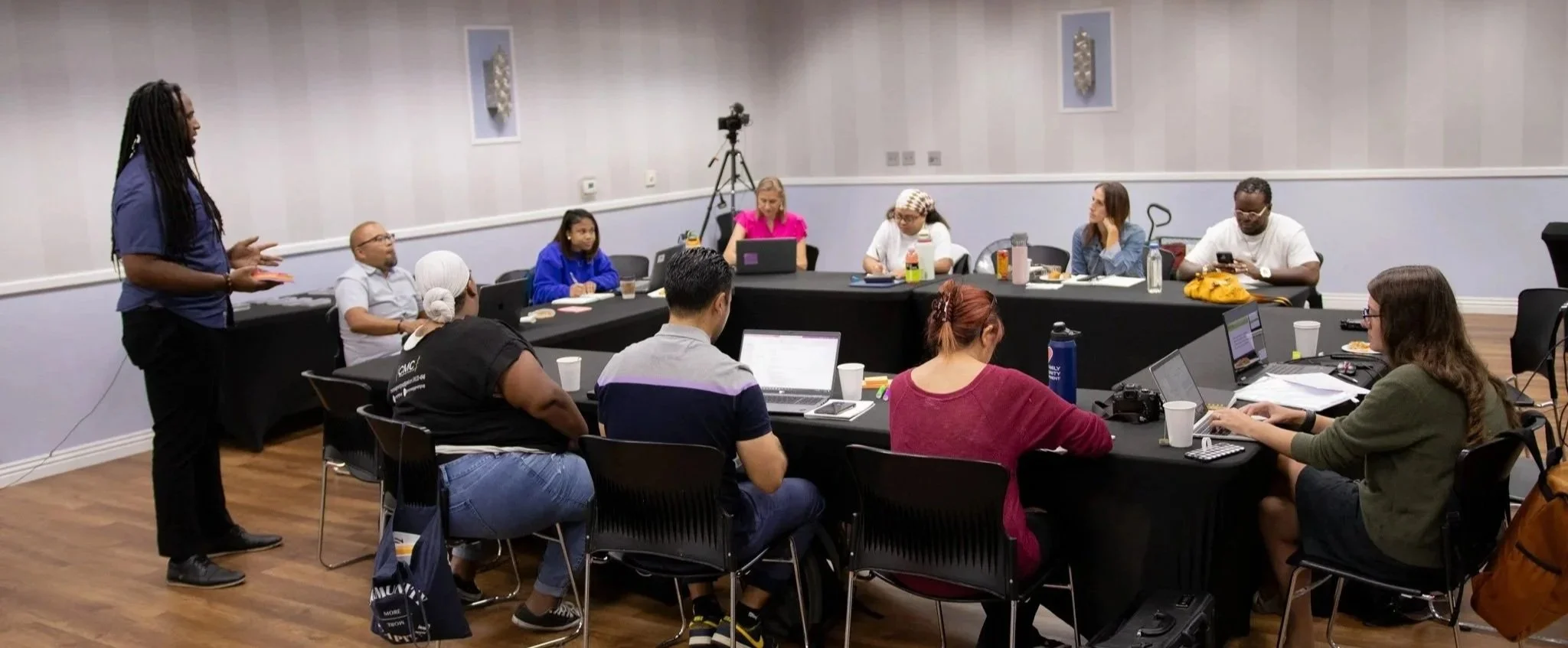
Pictured above: Cuevas Peacock (NGIN) facilitating a partnership workshop in Sacramento, CA with Economic Partnership Alliance participants.
If you lead a community-based organization, an economic development organization, or a city department, you have probably been asked to partner with the other two. Agreeing to work together is the easy part. The hard part is keeping the partnership alive after the kickoff energy fades, the budget shifts, and the people who started it move on. The cities in this post did that work, and their lessons are practical enough to borrow.
Through NGIN's Economic Partnership Alliance, nine coalitions worked to make cross-sector partnership endure. Each coalition was made up of community-based organizations, economic development organizations and, often, city government and focused on regional economic development projects. The pattern that emerged across all nine cities was the same: the partnership itself was the product, and the cities that treated it that way got the furthest.
Nine Coalition Building Examples
The Alliance Playbook documents nine of these coalitions in full, each with its own do's and don'ts. They span a public housing redevelopment in Honolulu, a commercial corridor in New Orleans, a regional economic mobility scorecard in Shreveport, a small business tenanting toolkit in Detroit, neighborhood planning partnerships in Sacramento and Sarasota, a rural workforce and entrepreneurship hub in Bangor, a seat in regional planning for Omaha, and a renewed master plan partnership in Cleveland. The five lessons below draw on all nine.
Lesson 1 from Sacramento: The Partnership Is the Project
Sacramento's coalition did not see NGIN's Alliance program as a vehicle for launching a single initiative. But rather, every shared event and planning discussion was treated as a chance to build the habit of working as one network instead of five organizations. The Playbook's advice from Sacramento is worth taping to the wall: recognize when the partnership itself is the primary intervention, and invest accordingly.
Lesson 2: Structure Beats Goodwill
Detroit's three partners had collaborated for years before NGIN's Alliance program, and their own conclusion was that even well-established partnerships require structure and facilitation to succeed. Monthly sessions with follow-up on the calendar were what they named as the most valuable part of the process. Nearly every city named the Playbook's Meeting Cadence & Accountability Kit as one of the tools it leaned on. It helps a coalition design a meeting rhythm that clarifies decisions, tracks commitments, and makes accountability visible, which is exactly the structure Detroit's partners said they needed.
Lesson 3: Recognition Is Capital
In Omaha, the Latino Economic Development Council (LEDC) had years of measurable impact in South Omaha yet still lacked a seat in regional planning. Partnering with the Metropolitan Area Planning Agency (MAPA) changed that—and the coalition's most important finding was that the recognition itself functioned as a resource transfer, opening doors with funders and giving LEDC leverage in investment negotiations. MAPA, in turn, began rethinking how to bring community-based organizations into its Comprehensive Economic Development Strategy, a process historically reserved for cities, counties, and established EDOs. Recognition from an established institution is a resource in its own right, and it is one that institutions can choose to extend.
Lesson 4: Plan for Turnover, Pivots, and Partners Who Leave
Every coalition lost something mid-stream. Cleveland's two lead organizations both changed leaders and had to reintroduce themselves to a plan that had lost cohesion; their lesson was to treat turnover as an opportunity to reset expectations and clarify roles, not as a setback. Detroit pivoted from corridor stewardship to a tenanting toolkit and found the pivot strengthened alignment because it was managed openly. Bangor spent nearly a year preparing a funding application, but then watched the funding landscape change. However, they came out with stronger relationships and a new United Way partnership anyway. Honolulu's advice after institutional partners withdrew is the bluntest: get written, binding commitments from large institutional partners. Pivots, team turnover and partner changes are the problems the Coalition Continuity Framework was built to solve.
Lesson 5: Fund the Capacity of the Smallest Partner
The most consistent strain across nine cities was capacity, and it always landed on the smallest organization at the table. Omaha's Canopy South stepped back from regular participation because it could not spare the staff. Detroit's volunteer business associations could not keep up. Bangor's partners underestimated the administrative load and learned to plan for it. Sarasota named the remedy directly: without stipends, technical assistance, and organizational grants, residents and community-based organizations cannot sustain engagement at the level needed to influence city processes. Omaha added the other half of the equation—its regional planning agency had only $70,000 a year from the EDA for its planning functions, and said it would apply every year if federal resources existed for coalition-building. Both sides of the table need funding for the partnership to last.
Coalition Building FAQ
What are some examples of successful coalitions? The nine Economic Partnership Alliance coalitions above are working examples of successful regional economic development, each pairing community-based organizations with economic development organizations and often city government. Their full stories are in the Playbook's case studies.
What makes a coalition successful? Across nine cities, the same four building blocks held: trust built through kept commitments, a shared narrative, skilled facilitation and project management, and the operational discipline of regular meetings, documented roles, and written agreements. The Playbook's Core Insights cover each in depth.
How long does coalition building take? Longer than a single grant cycle. Several of the Alliance coalitions had no physical project to show after six months, yet they had made their most important progress: clear roles, a meeting rhythm, and trust between partners who had not worked together before. Judge the first year by the strength of the partnership, not only by completed projects.
Pick the city that looks most like yours and read its full story in the Alliance Playbook's case studies, then explore Core Insights for the building blocks that made each of them work.