
The Ownership Advantage
Exploring Ownership-Centered Economic Development Models That Build Wealth
Why Ownership Matters
Ownership-centered economic development strategies promise to deliver prosperity for communities, particularly low- and middle-income (LMI) workers and underinvested places, where traditional economic development strategies have fallen short.
This report focuses on a specific slice of the asset-ownership landscape: models where ownership of a shared or community asset is structured and governed collectively rather than through individual asset-building tools including Community Land Trusts, Worker Cooperatives, and Community Investment Vehicles, to name a few.
Four Approaches To Building Wealth Through Ownership
-
Community Investment Vehicles
Locally rooted structures pool capital or property to support ownership for low- and middle-income communities.
How This Model Builds Wealth
Equity or returns flow back into the community. -
Community Land Trusts
A nonprofit trust holds land in perpetuity while residents or businesses own the buildings on it.
How This Model Builds Wealth
Owners build equity in buildings while the trust keeps long-term land value in the community. -
Worker Cooperatives
A business is owned and democratically governed by the people who work there, typically with one member, one vote.
How This Model Builds Wealth
Workers share in profits and decisions about the business. -
Employee Stock Ownership Plans
A qualified retirement plan holds company stock in a trust on behalf of employees.
How This Model Builds Wealth
Employees accrue an ownership stake over time, typically paid out as shares vest or when they leave or retire.
Ownership In Practice
-

St. Paul, Minnesota
St. Paul’s shared ownership ecosystem
Ownership approach
Public investment connects cooperative development, technical assistance and lending.Who benefits
Workers and residents gain pathways to own businesses and neighborhood real estate.Key takeaway
Use city resources to strengthen trusted community partners and turn ownership ideas into practice.Photo: Tony Webster, Downtown Saint Paul Skyline (2011), CC BY 2.0. Illustrative city context, not a project property. Cropped for layout.
-
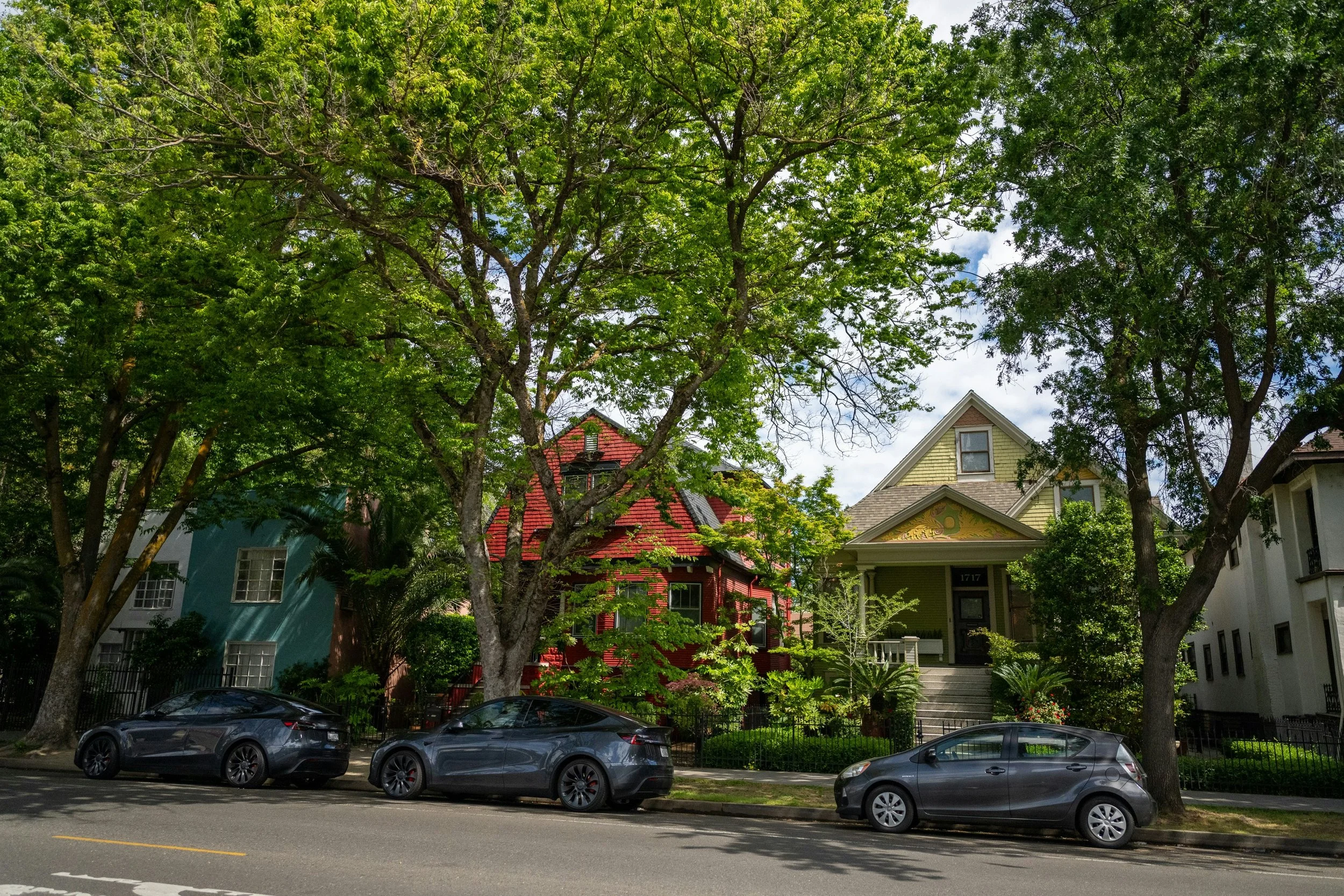
Sacramento, California
CLTRE’s Keep, Build, Make model
Ownership approach
Homebuyer preparation, real estate development and business incubation reinforce one another.Who benefits
Residents and entrepreneurs of color build pathways into homeownership, business ownership and commercial space.Key takeaway
Connect housing, small business and real estate so each ownership pathway supports the next.Photo: Michael Kahn / Unsplash. Midtown Sacramento neighborhood context, not a CLTRE property.
-

Jackson, Mississippi
Cooperation Jackson’s land-first model
Ownership approach
A community land trust anchors worker cooperatives on collectively owned property.Who benefits
Worker-owners and neighborhood residents gain a stable base for businesses, mutual aid and community use.Key takeaway
Own land and buildings to protect community activity from eviction and rising rents.Photo: Drew Dempsey / Unsplash. Jackson, Mississippi city context, not a Cooperation Jackson property.

Build From What Communities Have Learned
-
Own The Land Before Building The Programs
-
Layer Capital Rather Than Depend On Any Single Source
-
Start Small, Prove The Model, Then Scale
-
Community Organizing And Education Are As Essential As Business Development
-
Reframe How Success Is Measured
Read The Full Report
The Ownership Advantage
Exploring Ownership-Centered Economic Development Models That Build Wealth
Acknowledgments
About The Contributors
This insight piece was developed by New Growth Innovation Network (NGIN). We extend special thanks to the following contributors for their research, writing, review, and editorial support: Beka Burton, Cuevas Peacock, Jackie Robles, M. Yasmina McCarty, and Swati Ghosh.
About NGIN
New Growth Innovation Network (NGIN) is a national nonprofit that equips economic, community, and government leaders with insights, innovations, capital, and localized support to ensure that economically excluded communities can lead, shape, and benefit from regional economic growth.
About The Funder
This work was made possible through the generous support of the Robert Wood Johnson Foundation (RWJF). RWJF is a leading national philanthropy dedicated to improving health and well-being in America. Through its grantmaking, research, and partnerships, the Foundation works to address the social and economic conditions that shape health and create opportunities for communities to thrive.