INSIGHT BRIEF SERIES
Building Wealth from Birth: How Small and Midsized Cities Can Use Baby Bonds and Direct Cash to Help Families Get Ahead
By Jackie Robles
The racial wealth gap in the United States is large and persistent, stemming from generations of excluded opportunity for communities of color. This gap is not accidental, nor does it reflect someone’s choices, effort, or character. Even when people work hard, get an education, and “follow the rules”, income alone isn’t enough to build the kind of wealth that can be saved, invested, or passed on. It is the result of systemic policies and practices that have limited communities of color from building and passing down wealth. Since the gap concerns who has had the opportunity to build and retain wealth, rather than simply who earns income, it is important to understand what wealth is and why it matters for families and communities.
Wealth is the foundation that gives families stability, choices, and a sense of possibility. It includes what people own, like savings, a home, or a small business, minus what they owe. Wealth matters because it determines whether a family can weather a crisis, pay for college, buy a home, start a business, or help their children get a strong start in life. It’s the difference between constantly scrambling to stay afloat and having room to plan, dream, and move ahead. Unlike income, which is what people earn from a job each year, wealth grows over time and can be passed down across generations. Two families might earn the same income, but the one with even a modest cushion of savings or assets has far more freedom, security, and opportunity than the one living paycheck to paycheck.
According to inequality.org, public policies that favor white Americans have perpetuated an extreme concentration of wealth in white households. Federal Reserve data shows that white households held 84.2% of all U.S. wealth as of the fourth quarter of 2023, while making up only 66% of households. By contrast, Black families accounted for 11.4% of households and owned 3.4% of total family wealth, while Hispanic families represented 9.6% of households and owned 2.3% of total family wealth. These figures make it clear that without intentional action, families born with fewer resources will keep passing down insecurity rather than the assets that help future generations live prosperous, independent, and hopeful lives.
Across this backdrop, policymakers and practitioners in Small and Midsize Cities (SMCs) are advancing a wide range of strategies to build wealth for Black, Indigenous, and People of Color (BIPOC) communities as part of a broader effort to counter these disparities. Cities are investing in community land trusts, expanding worker cooperatives, implementing community ownership, and supporting BIPOC entrepreneurs through incubators. These efforts reflect a long lineage of equity-driven policies designed to close racial wealth gaps and expand economic opportunity.
Policymakers are exploring solutions that address both families’ immediate financial needs and the deeper structural drivers of wealth inequality. One promising strategy combines guaranteed income with Baby Bonds. Together, these policies provide short-term financial stability while building long-term intergenerational wealth. This insight piece explores the potential of this combined approach, highlights programs already using each idea on its own and one piloting a blended model, and outlines considerations for replicating them in SMCs.
To learn more on this topic, join NGIN on February 5th for an interactive expert conversation on guaranteed income and baby bonds in collaboration with Accelerator for America.
An Overview of Baby Bonds and Guaranteed Income
-
Baby Bonds are publicly funded “trust accounts” established at birth for children, particularly those born into low-income families. These accounts grow over time and become accessible in young adulthood, typically around age 18. They provide capital for wealth-building investments such as education, homeownership, or entrepreneurship. Baby Bonds address structural inequality by giving young people a financial foundation that they might not otherwise have.
Research from the Urban Institute finds that a federal Baby Bonds proposal, such as the American Opportunity Accounts Act, could substantially increase wealth for all families with children born between 2024 and 2048, with the largest gains for Black and Hispanic families who are more often in lower-income brackets. The program would reduce both the share of people taking on student loans and the amount borrowed—most notably lowering student debt rates for Hispanic women from 58% to 36% and reducing average borrowing for Black men from $31,000 to $19,000. It would also increase home equity for those using their accounts to buy homes, with the greatest impact for Black and Hispanic families, and modestly boost retirement savings, particularly for Black and Hispanic men and women. Importantly, Baby Bonds are no longer just a policy idea; they are becoming reality. Connecticut launched the nation’s first statewide Baby Bonds program in 2023, automatically investing funds for every child born into HUSKY (Medicaid) coverage. Thousands of babies are already enrolled, demonstrating that a publicly funded Baby Bonds model is both feasible and impactful.
By age 18, average account balances are projected to reach $26,000 for Black youth, $27,000 for Hispanic youth, and $18,000 for white youth. The program would reduce both the share of people taking on student loans and the amount borrowed—most notably lowering student debt rates for Hispanic women from 58% to 36% and reducing average borrowing for Black men from $31,000 to $19,000. It would also increase home equity for those using their accounts to buy homes, with the greatest impact for Black and Hispanic families, and modestly boost retirement savings, particularly for Black and Hispanic men and women.
-
Guaranteed Income provides recurring unconditional cash payments to individuals or families. Program participants can use these payments for needs such as food, housing, basic supplies, etc. By offering predictable financial support, it allows families to reduce debt, pursue job training or entrepreneurship, and meet their basic needs now.
A report by the Center on Budget and Policy Priorities shows that providing young adults with three years of guaranteed income can meaningfully shift their focus toward long term opportunity. One thousand adults ages 21 to 40 received $1,000 per month from 2020 to 2023, enabling many to invest in education, training, job search, and entrepreneurship. The strongest gains were among participants in their 20s, who worked slightly fewer hours but increased their time in higher education by over an hour per week, often using the added financial stability to pursue degrees or career building skills they otherwise could not afford. Older adults saw no change in employment but reported pursuing business ideas and more intensive job searches. Participant stories underscore the program’s real-world value such as making graduate school feasible, starting a business, and allowing parents to better care for their children.
One of the recent federal programs that draws on some of the basic ideas behind Baby Bonds is the creation of Trump Accounts, included in the One Big Beautiful Bill (OBBA). Each eligible child born from 2025 through 2028 would receive a one-time federal contribution of $1,000, regardless of family income. Although the proposal takes inspiration from asset building policies such as Baby Bonds, these savings accounts are not designed to reduce wealth inequality in the way baby bonds were originally envisioned.
The program does not include automatic enrollment and depends heavily on voluntary savings by families. This approach tends to benefit households that already have the financial ability to save. As a result, critics argue that instead of directing the most support to children with the fewest assets, Trump Accounts may increase the existing gap by giving the greatest boost to families that already have economic security.
Closing the Gap: How Combined Strategies Address Short- and Long-Term Needs
Both Guaranteed Income and Baby Bonds address different parts of the same larger goal: helping families achieve greater economic security and stability. Guaranteed Income provides reliable cash that helps people meet daily needs and weather financial shocks, but it does not create long-term wealth and therefore cannot, on its own, close the wealth gap. It also depends on stable funding that can be vulnerable to political shifts and often raises questions about “deservedness” from those who believe adults should simply work harder. Baby Bonds, on the other hand, create long-term assets that can help build wealth over time, but they require sustained commitment and a substantial investment over many years before their benefits are realized, and some critics question whether recipients will use the funds responsibly. While Baby Bonds are a compelling idea, it is not yet widely known, making it essential to engage leaders and policy makers to build support for public investment in wealth building solutions. Together, these policies highlight why pairing short-term income support with long-term asset building can offer a more complete path to economic security.
The table below provides a quick comparison of Guaranteed Income and Baby Bonds to highlight their key differences and complementary strengths.
| Feature | Baby Bonds (BB) | Guaranteed Income (GI) |
|---|---|---|
| Core Goal | Generational Economic Security | Short-term financial stability |
| Typical Investment Amount | ~$3,000+ placed in a trust or account, increasing to $10,000+ by the time of withdrawal | ~$300–$1,500 per month for 6–24 months, and/or lump sum at start of program |
| When Funds Are Accessed | At adulthood (ages 18–26), depending on program | Immediately during pilot period |
| Typical Uses | Education, homeownership, business startup, asset-building | Rent, food, bills, childcare, transportation, basic needs |
| Number of Pilots Underway (as of publication) | Early and growing: 10 pilots and a few states adopting these policies | 150+ pilots nationally across cities, counties, and states |
| Policy Origins | Equity-focused; aimed at reducing racial wealth gaps | Designed to reduce income volatility and improve household stability |
| Funding Sources | Public dollars for core initial investments and philanthropy can jumpstart pilots | Primarily philanthropy and public funds |
Case Studies of Baby Bonds and Guaranteed Income in Small and Midsized Cities
SMCs across the country are experimenting with innovative approaches to reduce household vulnerability and long-term wealth inequality through Baby Bond and Guaranteed Income programs. SMCs can be well positioned to pilot innovative, combined approaches like Baby Bonds and Guaranteed Income because their size allows for nimble program design, closer community engagement, and measurable impact, while still reaching a population large enough to demonstrate meaningful results. Even with the resource constraints SMCs face, some cities have successfully launched Baby Bonds and Guaranteed Income pilots by utilizing significant philanthropic support. These partnerships and creative funding strategies have enabled cities to test and scale wealth-building models that would be difficult to pursue through public budgets alone. While philanthropy can help launch early pilots, public support and funding is ultimately essential, as philanthropy alone cannot sustain these solutions at a meaningful scale or over the long term. The case studies below demonstrate how these approaches are taking shape locally and what they can offer as scalable and inspirational models for other communities.
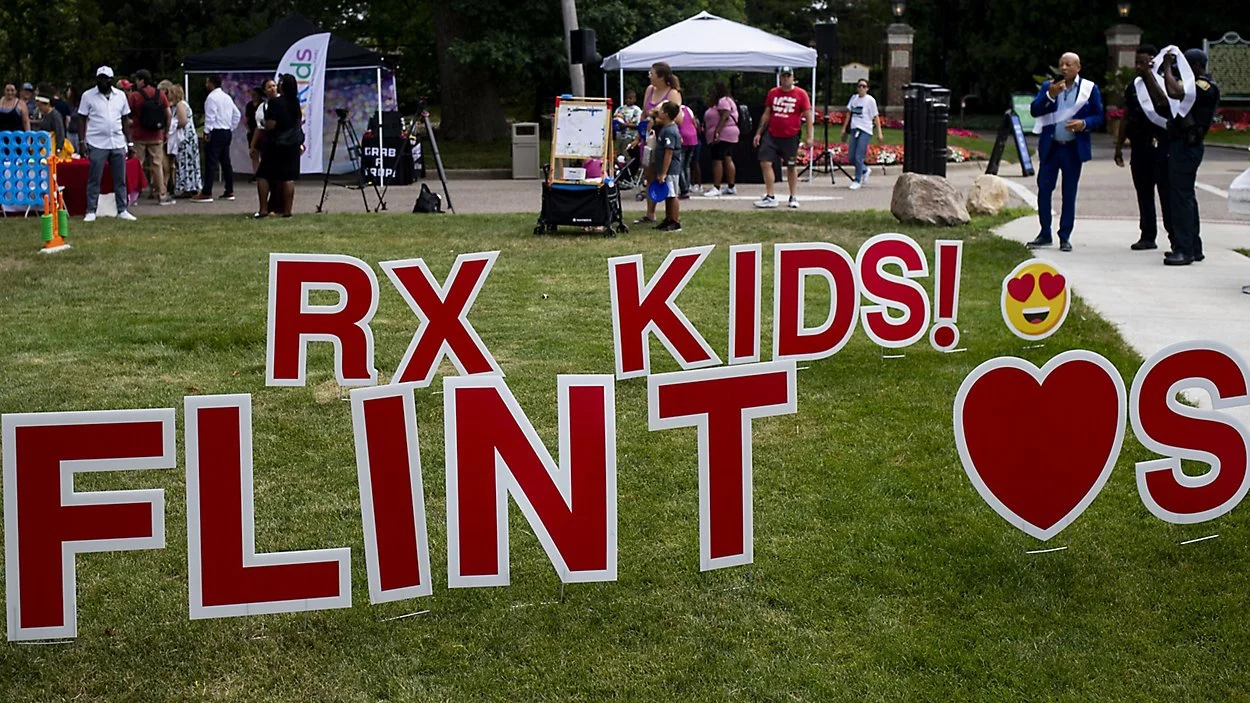
Flint, Michigan - Rx Kids
Flint, Michigan (population 81,252), Rx Kids program, launched the nation’s first citywide maternal and infant cash prescription program in 2025. Pregnant mothers receive $1,500 during pregnancy, followed by $500 a month during the baby’s first year. The design explicitly connects income support to health outcomes, recognizing that financial stress during pregnancy and infancy is a critical determinant of lifelong well-being.
Early results, published in the American Journal of Public Health, demonstrate significant positive impacts for participating mothers. Compared to control groups in nearby areas and previous years in Flint, Rx Kids moms experienced greater financial stability, more secure housing, fewer evictions, and better access to preferred foods. Participants also reported improved maternal mental health, with lower rates of postpartum depression, anxiety, and higher feelings of empowerment, value, and hope-strong indicators of long-term well-being.
In addition, according to an analysis by the W.E. Upjohn Institute for Employment Research, Rx Kids delivers a powerful economic boost to Flint, Michigan, creating up to 200 jobs and adding $15 to $40 million in annual personal income. Each dollar invested returns $1.60 to $3.00 to the state economy, with most benefits felt locally. The program raises per capita income by 2.4 times its cost, making it a high-impact investment in families and communities.
Rx Kids is funded through a braided model that combines public TANF dollars, private support from philanthropy, local businesses, and health care systems. Read more here about Rx Kids funding and policy playbook.

Case Study: Omaha, Nebraska - The Bridge Project
The Bridge Project in Omaha, Nebraska (population 486,051) is part of a rapidly expanding multi-state unconditional cash support initiative centered on the belief that early investment in mothers and babies can transform long-term outcomes.
Omaha’s program supports pregnant women beginning in the third trimester, when participants receive an initial lump sum followed by ongoing monthly payments. The specific amount is dependent on the city's cost of living. This structure reflects extensive research showing the importance of prenatal and early postnatal periods and the stability that cash can provide during these critical stages. Beyond cash support, the program offers a broad set of services including doula access, workshops, breastfeeding support, community building activities, and practical coaching such as resume preparation and job interview readiness. The wider Bridge Project network now supports roughly 3,800 mothers across multiple states and has distributed more than $90 million since its inception. The effort is designed to counter punitive and burdensome traditional systems by centering trust, autonomy, and dignity.
The program’s early findings show reduced food insecurity, improved ability to afford childcare, and increased capacity for women to leave unsafe situations or stabilize housing. Many parents use funds for diapers, specialty formulas, and basic needs that public programs frequently do not cover or restrict. The Bridge Project’s model is also helping shift broader conversations about maternal health and Guaranteed Income by demonstrating that investments in mothers and babies are both a community priority and a practical, cost-effective strategy that can reduce reliance on shelters, improve birth outcomes, and generate long term public savings. For example, every dollar invested in a baby yields a greater return through better education, higher earnings, and greater tax contributions. Already, 17% of Bridge moms are pursuing post-secondary degrees, proving an investment in babies is an investment in America’s future.
The program is funded primarily through philanthropy. It uses private dollars to pilot the program and build evidence that can inform future public funding and policy, as seen in other cities.

New Haven, Conneticut - ConnCORP and ConnCAT
Some SMCs are already experimenting with ways to bridge the gaps between Baby Bonds and Guaranteed Income. For example, in New Haven, Connecticut (population 135,319), home to the country’s only statewide publicly funded baby bond program, piloted the Wealth Accelerator program investing $20,000 in 20 young adults along with financial education. The young adults will be able to use this funding to purchase homes, start businesses, save for retirement, or further their education. This innovation directly tackles the “delayed benefits” challenge of Baby Bonds by providing this lump sum to young adults now. Results from this pilot will inform future initiatives and provide a stronger case for other communities to replicate.
In total, the pilot program is expected to distribute $564,000 to participants. The funding has been provided with the support of M&T Bank, Edward Jones, and the Connecticut Project.

Case Study: Atlanta, Georgia - Freedom Futures
Freedom Futures is a first-of-its-kind accelerated Baby Bonds pilot program in the city of Atlanta, Georgia (population 520,070), that provides participants with an investable sum of $40,000 for wealth-building purposes such as homeownership, entrepreneurship, higher education, or investing in a retirement account.
In addition, participants will receive $500 per month for four years to help meet their basic needs, no strings attached. Lastly, they will receive online, group, and one-on-one financial advising to support informed financial decisions and goal setting.
More than 10 states have introduced Baby Bonds legislation, and Yale is already leading research on the early outcomes of these programs. In the years ahead, Freedom Futures will add to this evidence base by generating new data on how combining Guaranteed Income with Baby Bonds can support long-term wealth building.
The program is run by a local nonprofit and is privately funded; it is not sponsored or funded by the city.
If you’d like to stay updated, you can follow updates on Baby Bonds, Guaranteed Income, and the combined approach here.
7 Ways to Model in Small and Midsized Cities
Successfully implementing these programs involves careful attention across multiple areas; engaging the community, securing funding, designing effective programs, and evaluating outcomes. While Guaranteed Income and Baby Bonds can play a powerful role in strengthening economic security, they are not enough on their own; communities must also invest in housing, health, childcare, and the broader conditions that allow families to thrive. The following steps and insights are drawn from leaders who have implemented these models in their own communities and offer a practical roadmap for SMCs to consider, design, and replicate models in their own communities.
-
Study examples from Georgia, Nebraska, Connecticut, and other states’ initiatives.
Early learning helps avoid missteps and accelerates readiness.
Consider how local political context shapes the narrative. The way these programs are discussed in one state or city may not resonate in another, so tailor the message to the local environment and be clear about the specific problem you are trying to address.
-
Explain why many residents cannot fully participate in the local economy.
Understand what local data says about outcomes from those born into poorer circumstances – health, education, employment, justice involvement, housing security, etc.
Consider atypical allies: Chambers, hospitals, financial sector, labor, faith, AARP, Realtors etc. – All have an interest in Baby Bonds, but for different reasons.
-
Develop a learning agenda and define key questions.
Understand return on investment and explore whether programs could reduce future reliance on public benefits, generate savings through improved maternal health, or create other long-term community benefits.
We cannot “program our way out of poverty”. Getting at the root cause is more effective.
Use research to ensure credibility, evaluate impact, and inform future policy.
-
Consider automatic enrollment, progressive funding, and eligibility criteria.
Define allowable uses, account structures, and family engagement strategies.
Include financial education, one-on-one advising, and goal-setting support.
Tailor to local context:
Consider eligibility age ranges and residency requirements based on city needs.
Consider keeping eligibility criteria low and responsive to the target population.
-
Determine what it will cost to operate the program over time, including staffing, external partners, technical systems, and infrastructure required for implementation and fund management.
Private philanthropic funding can offer greater flexibility and make the case for policy adaption and/or larger pilots.
Read the funders guide by The New School Institute on Race, Power and Political Economy and the Asset Funders Network.
Ensure funding is resilient to political, administrative, and economic changes.
-
Pair programs with clear evaluation plans to strengthen the narrative for broader adoption.
Anticipate skepticism and clearly communicate program purpose, benefits, and rules.
Starting with a smaller sample size can help generate evidence that supports future policy action.
Consider pathways to state policy for program evolution beyond a pilot.
-
Launching a standalone pilot may not always be the most effective approach.
Pooling resources with other communities or organizations can produce a larger collective impact and create stronger data to support long-term policy change.
Use education and outreach to demystify programs that may be perceived as “too good to be true” and build trust with community.
These guiding principles and next steps offer a strong starting point, whether your city is exploring this new idea, collaborating with other communities, or fully launching a program to contribute to the greater good. SMCs can lead the way, demonstrating that innovative, equity-focused solutions like a combined approach of Guaranteed Income and Baby Bonds can transform economic opportunity for those who have been historically excluded.
This insight piece would not be possible without the contributions from David Radcliffe at the Institute on Race, Power and Political Economy, Hope Wollensack at Georgia Resilience and Opportunity Fund (GRO), Tegan Lecheler at The Bridge Project, and William Elliott III at the University of Michigan. Their perspectives and commitment to equity have shaped this work.