Collaboration Is the Infrastructure: Three Insights from NGIN’s 2025 SCALE Convening in Cincinnati
By: Beka Burton, NGIN Advisor
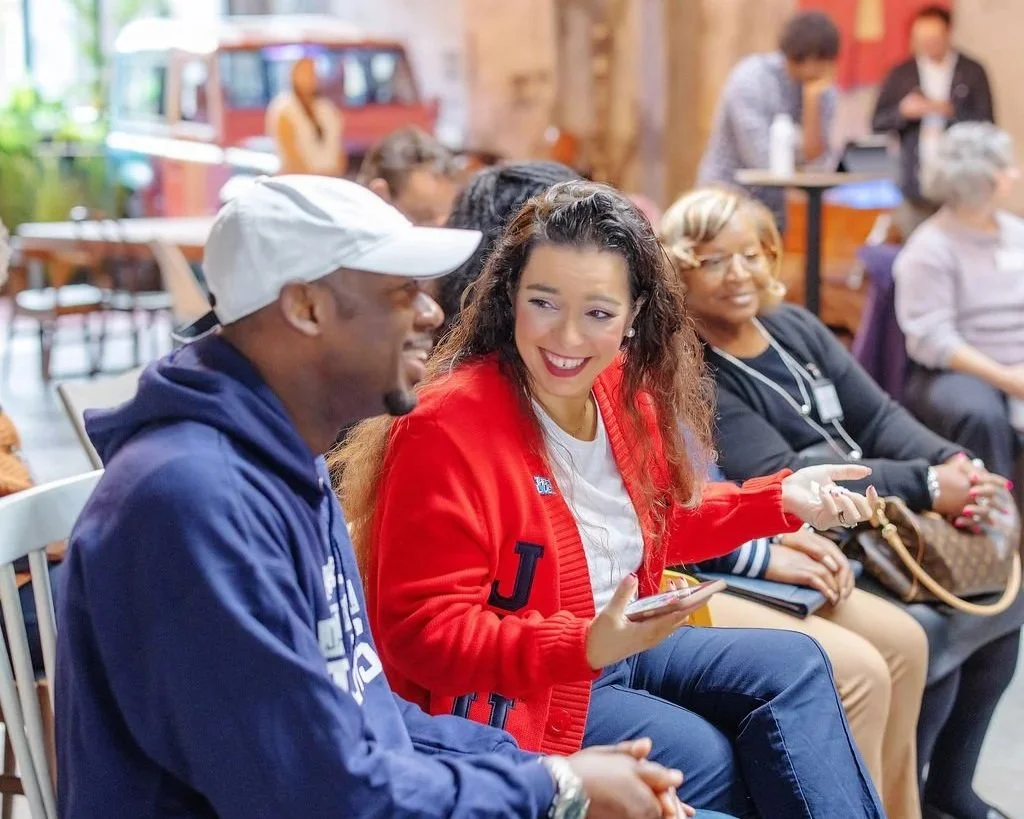
At the end of October, leaders from across the country gathered in Cincinnati for NGIN’s 2025-2026 SCALE programs kick-off convening–four days of field-learning, relationship-building, and rigorous reflection about what it takes to build inclusive economies that actually work for people. SCALE is a working lab for city leaders navigating the complexity of today’s economic landscape.
From walking tours in Over-the-Rhine to worker-owned business deep dives at Co-op Cincy, and conversations with bankers to site visits with developers, Cincinnati told a powerful story – not as a “perfect city,” but as a place willing to wrestle in public with the hard questions of growth, equity, and shared ownership.
As we closed each day with our “I Like, I Wish, I Wonder” reflections, three themes rose to the surface again and again.
Inclusive Development Is Built on Relationships Not Just Programs
Participants didn’t just notice Cincinnati’s projects; they noticed its people.
Delegations were struck by how deeply collaboration is embedded across sectors:
Public agencies working shoulder-to-shoulder with philanthropies
Business leaders treating equitable growth as core strategy, not corporate charity
One participant from New Orleans summed it up simply: “I like that Cincinnati’s ecosystem is based on collaboration, not competition.”
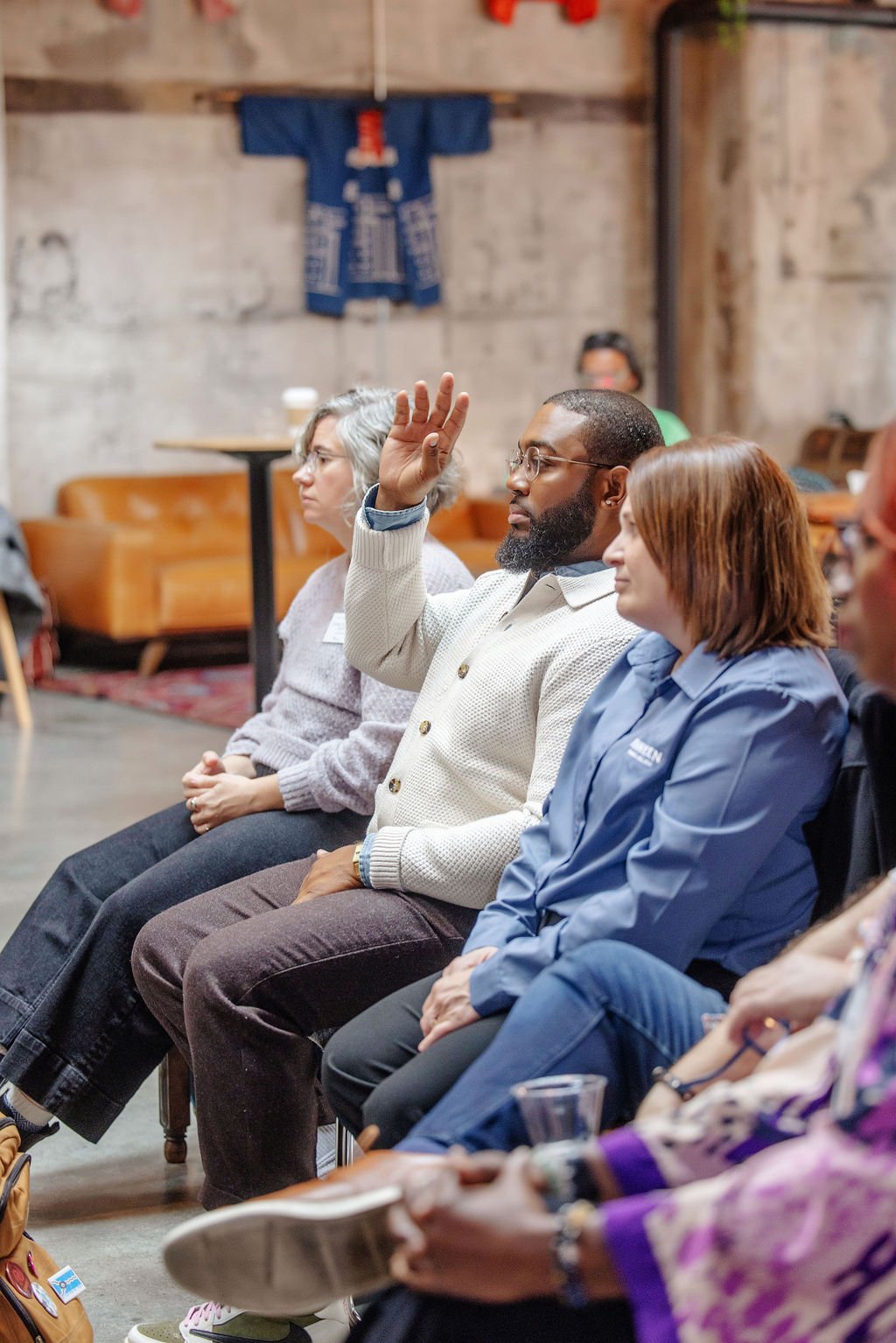
One participant from New Orleans summed it up simply:
“I like that Cincinnati’s ecosystem is based on collaboration, not competition.”
That observation came alive during conversations with community-facing organizations like CityLink Center. CityLink’s co-location model allows residents to access workforce development, childcare, financial counseling, health services, and case management under one roof, dramatically reducing transportation barriers and fragmented referrals. The result is faster enrollment into services, stronger retention, and measurably better outcomes because families navigate a single coordinated system rather than piecing together resources agency by agency.
Delegates also noted the role of private-sector leadership including banks and CEOs who view inclusive growth as both a moral imperative and market strategy. Several participants asked pointedly: Where are these leaders in my city? How do we cultivate more like them?
Nationwide, we’ve seen that cultivating leadership alignment may be less about “finding the right leaders” and more about structuring the right tables: consistently convening CEOs, philanthropies, community organizations, and public officials around a common economic priority; providing a neutral intermediary to manage strategy; and demonstrating early proof of concept that inclusive investments reduce risk, stabilize neighborhoods, strengthen workforce pipelines, and benefit the local economy. When leaders can clearly see shared value, not just shared virtue, alignment becomes easier to sustain.
The lesson was clear: vibrant ecosystems don’t “emerge” by accident – they are intentionally built through trust, relationship, and a shared commitment to outcomes.
Tools Are Transferable, Cultures Are Not… But Both Matter
Across four days, participants encountered Cincinnati’s infrastructure for revitalization up close especially through organizations like 3CDC and cultural anchors such as Findlay Market.
There was no shortage of admiration from the delegation:
“I like the coordination.”
“I like the murals.”
“I like the ecosystem.”
“I like how the city looked at itself in the 1990s and decided it had to stop being horrible for everyone.”
And yet, nearly every compliment came paired with a hard question:
What can we actually replicate?
How do we adapt this for a smaller city?
What happens in places without corporate presence or philanthropic density?
How do we make this work in different political climates?
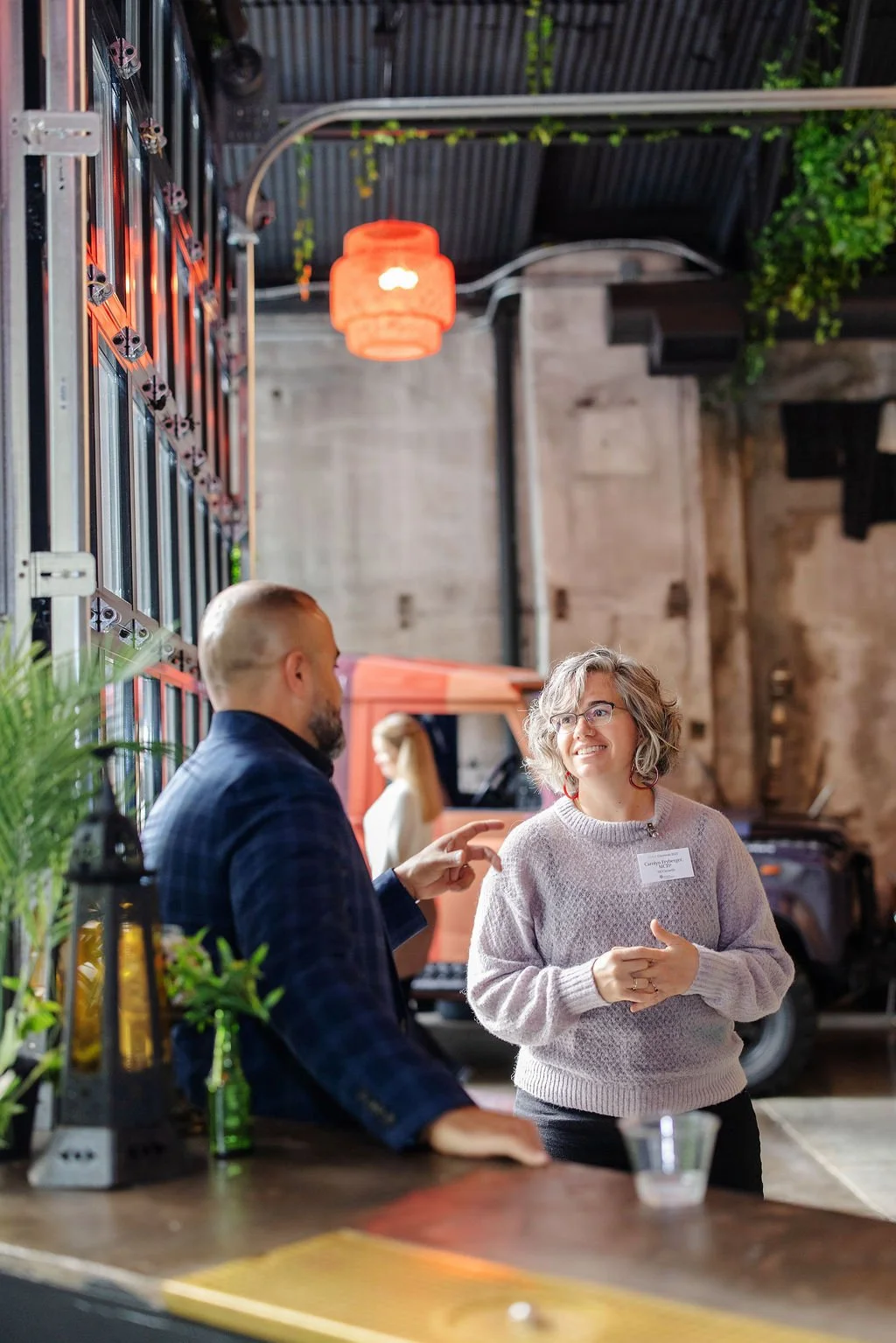
For cities like Greenville, MS, Stockton, CA, and York, PA, size and scale loomed large. The admiration was real but so was the realism:
“Cincinnati is a different size. We don’t have that level of corporate investment. So, what does the smaller-scale version look like?”
During the learning sessions with Co-op Cincy, many participants leaned forward not just in curiosity, but in possibility. Could worker ownership work in Chattanooga? What is the turnover rate for co-ops? How long does it take to see community-level gains? Could co-ops be a wealth-building tool in places without big developers?
While there are approximately 450 worker-owned co-ops in the US currently, there is room for growth. The reason shared in response to the question – why aren’t there more co-ops? – is simply the knowledge of their existence and community benefit is lacking nationwide. Co-op Cincy has built a robust list of resources to enhance knowledge and provide tangible, direct listings of starting a co-op, worker owner or union, in a community. The Democracy at Work Institute also has additional information about worker owned cooperatives.
The takeaway: models travel but culture translates. And the work of inclusive development is not copy-paste. It’s interpretive, contextual, and deeply local.
Leadership Still Moves the Work – But Leadership Must Evolve
During the Mayor’s presentation, city leaders across the SCALE cohort shared how they are confronting long-standing challenges with new strategies:
Converting commercial properties into housing
Addressing heirs’ property and tax barriers
Piloting tax and medical debt forgiveness
Reforming zoning to unlock middle-market housing
Rethinking land use to discourage disinvestment and sprawl
Searching for capital in “philanthropic deserts”
Across cities, the reflection was consistent: the right leadership unlocks the right work but tomorrow’s challenges require new kinds of leadership.
Several participants wondered aloud:
How do you engage corporate leaders in real co-ownership of solutions?
What incentives actually sustain cross-sector collaboration?
How long does change take to reach residents not just skylines?
What tension existed before the trust?
As one attendee put it:
“I wonder what the struggle phase really looked like. What do we need to be prepared for in our city?”
That question may have been the most honest insight of the convening: success doesn’t come fully formed. It is built slowly – through experimentation, missteps, alignment, and patience. These are questions that the SCALE participants will be tackling over the course of the next few months during their participation in the program slated to be completed in the fall 2026.
Moving Forward: Cincinnati As Mirror, Not Model
What SCALE participants learned in Cincinnati wasn’t how to “be Cincinnati.”
They learned how to see their own cities more clearly. They left asking sharper questions about leadership, power, ownership, culture, and scale. They returned home thinking not just about projects, but about ecosystems.
That is what SCALE is designed to do: not prescribe solutions – but deepen practice.
At NGIN, we believe cities do not become inclusive by accident. They become inclusive when leaders across sectors choose each other over and over again and build systems that reflect dignity, access, and possibility.
Cincinnati didn’t offer a blueprint.
It offered a mirror.
And for many leaders in the room, that may have been the most powerful insight of all.